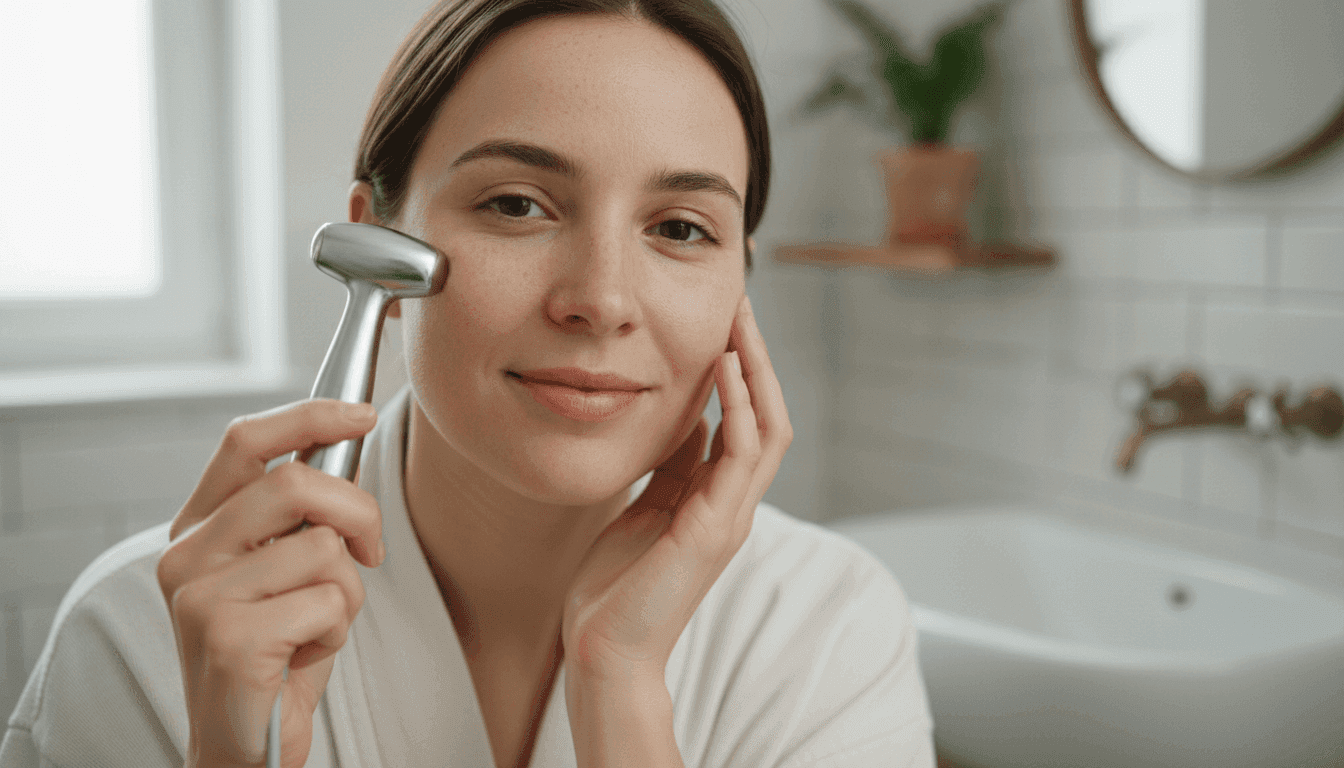
A cold hammer facial is a cooling step used during professional facials to make the skin feel calmer and more comfortable after active phases such as cleansing, exfoliation, steaming, extraction, or device work. It is not a standalone medical treatment. It is a supportive skincare step that helps the facial finish feel more balanced.
In a professional facial, the cold hammer is usually used near the end of the treatment or after a stronger phase. The cool surface glides over the skin to reduce a hot, flushed, or tight sensation and support a comfortable finish.
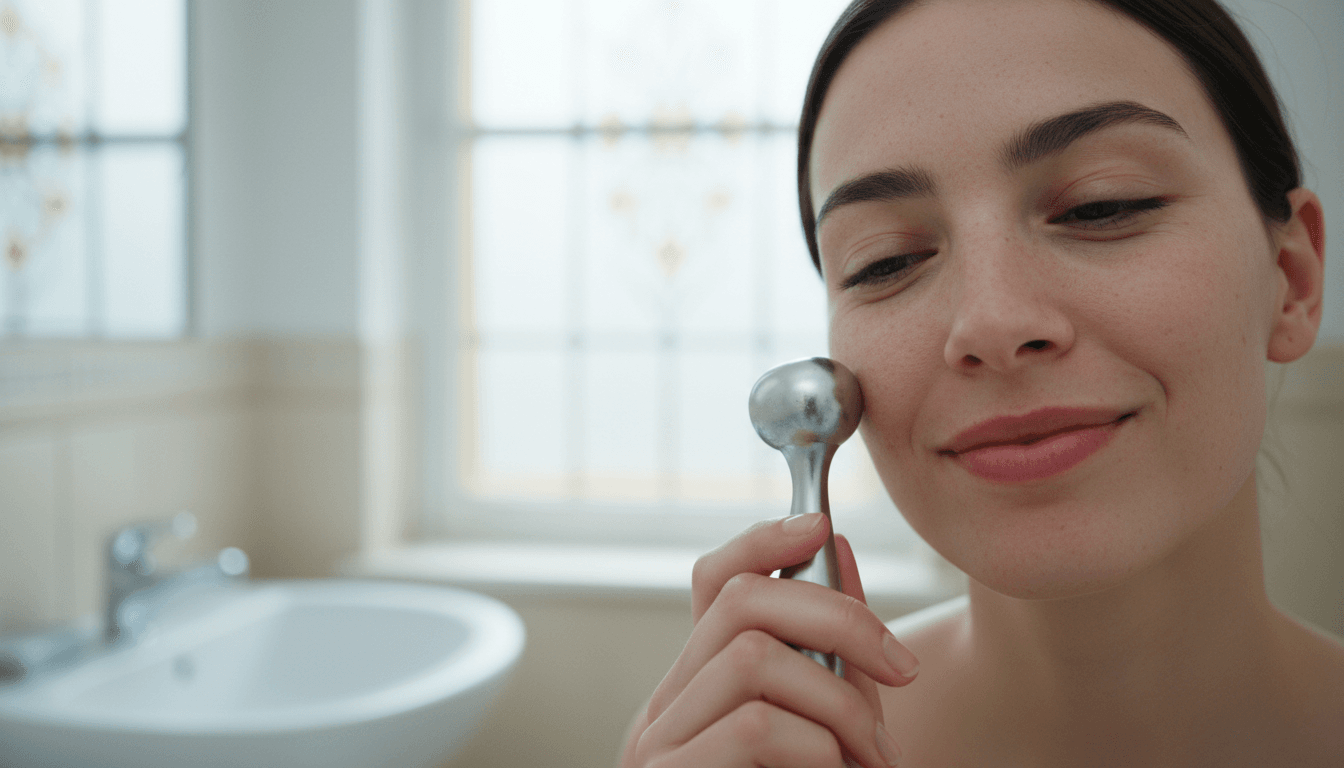
What is a cold hammer facial?
A cold hammer facial is a skincare technique that uses a handheld cooling device on the face. The device has a smooth metal surface that becomes cold and is moved gently across the skin.
The cold hammer is most often used as a comfort step inside a larger facial. It can follow deep cleansing, exfoliation, pore work, warming steps, or other active treatment phases. In practice, many clients experience it as a refreshing pause after the more intensive parts of a facial.
The cold hammer does not diagnose, treat, or cure skin conditions. It is a non-invasive salon technique that focuses on comfort, temporary cooling, and a more settled skin feeling after treatment.
What does a cold hammer do in skincare?
A cold hammer in skincare cools the skin surface. The main purpose is to reduce the feeling of heat, tightness, or sensitivity that can appear after active facial steps.
Cooling can make the skin feel fresher and less reactive at the end of a facial. Many clients notice that the skin feels more comfortable after warmth, exfoliation, or extraction when a cooling step is included.
A cold hammer may also make the skin look temporarily smoother or less flushed. This effect depends on the person, the treatment performed, and skin sensitivity. Cleveland Clinic’s overview of facial cooling and its limitations describes temporary effects and the risk of irritation from excessive cold. Home icing is not the same as a controlled salon device, and it is not evidence of lasting cold hammer results.
Why the cold hammer is often used after intensive facial phases
The unique value of a cold hammer facial step is its timing. It is often used after the phases that can make the skin feel warm, active, or slightly stressed.
In a professional skincare setting, intensive phases may include steaming, exfoliation, deep cleansing, manual pore work, or certain device-based steps. These phases can be useful in a facial plan, but they may leave the skin feeling warm or exposed for a short time.
The cold hammer acts as a cooling bridge between active treatment and the final calming products. It helps the skin feel less hot before the facial is finished with a mask, serum, moisturizer, or sun protection when appropriate.
After cleansing and steaming
Cleansing and steaming can make the skin feel warm. A cold hammer can help bring back a cooler, more settled sensation after these steps.
This is especially relevant for clients who feel flushed easily during facials. The cooling step does not replace proper technique, but it can make the treatment feel more comfortable.
After exfoliation
Exfoliation can leave the skin feeling fresh, but it can also create a temporary tingling or warm feeling. A cold hammer may help reduce that sensation after the exfoliation phase is complete.
The skin still needs barrier-supporting products after exfoliation. Cooling alone is not enough if the skin is dehydrated, over-exfoliated, or sensitive.
After extraction or deep cleansing
Deep cleansing and extraction can be an active part of a facial for congested skin. A cold hammer can help the skin feel more comfortable after careful pore work.
In practice, this is one of the most appreciated uses of the cold hammer. Clients often describe it as a relief after the most intensive part of the facial.
After selected device steps
Some facials include device-based steps that may create warmth or stimulation. A cold hammer can be used afterward to create a cooler finish.
The exact sequence depends on the treatment protocol and the condition of the skin on the day. A professional should adjust the facial if the skin looks too sensitive or reactive.
What a cold hammer facial feels like
A cold hammer facial step usually feels cool, smooth, and gentle. The sensation is similar to a chilled metal facial tool gliding across the skin, but with a more controlled cooling effect.
Most people find the feeling refreshing. It should not feel painful, sharp, or uncomfortably icy. If the cooling feels too intense, it is appropriate to tell the facial therapist immediately.
The movement should be slow and controlled. The cold hammer is not meant to drag the skin or create pressure. It is a comfort-focused step, not a forceful massage technique.
Who is a cold hammer facial step for?
A cold hammer facial step can be helpful for people who enjoy a cooler finish after active skincare steps. It is often suitable for skin that feels warm after cleansing, exfoliation, extractions, or a longer facial.
It may be especially appreciated by clients with dehydrated skin, dullness, congestion, or temporary post-treatment flushing. These are cosmetic concerns, not medical diagnoses.
In Budapest, many people notice that summer heat, sweat, SPF, and city exposure can contribute to congestion and a warmer skin feeling. In that context, a cooling step can make a deep cleansing or glow-focused facial feel more balanced.
It may be useful if you notice:
- Your skin often feels hot after steaming or cleansing.
- Your skin looks temporarily flushed after extractions.
- You prefer a fresh, cooling finish in a facial.
- Your skin feels tight after active treatment steps.
- You want comfort after a longer professional facial.
Who should be cautious with cold hammer use?
Cold hammer use is not ideal for every skin situation. People who are very sensitive to cold should be cautious. People with a history of cold-triggered hives or unusual reactions to cold should avoid this step unless they have appropriate medical guidance.
Cooling may not be comfortable if the skin is broken, severely irritated, sunburned, or actively painful. A facial should be simplified when the skin barrier feels compromised. After a recent medical peel, laser procedure or surgery, follow your treating clinician’s advice and do not add cooling unless they recommend it.
People with persistent redness, strong burning sensations, unexplained swelling, or painful inflamed lesions should consider seeing a dermatologist. A salon facial can support skin comfort and care, but it is not a substitute for medical evaluation.
What a cold hammer facial can and cannot do
A cold hammer facial can support comfort after active facial steps. It can temporarily cool the skin and reduce the feeling of heat or tightness.
A cold hammer facial cannot permanently shrink pores. Pores do not open and close like doors. Cooling may make the skin look temporarily tighter, but pore appearance is influenced by genetics, oil flow, congestion, and skin condition. The American Academy of Dermatology explains how gentle care can make pores less noticeable; cooling is not a permanent pore-size treatment.
A cold hammer facial cannot cure acne, rosacea, eczema, or other medical skin conditions. It can be used as part of a cosmetic facial plan when appropriate, but medical concerns need medical advice.
Realistic benefits
- Temporary cooling after active treatment steps.
- A more comfortable finish after deep cleansing.
- A fresher skin feeling after exfoliation or warmth.
- Temporary reduction in the look of flushing for some clients.
- A smoother transition into calming masks or finishing products.
Realistic limits
- It does not replace gentle cleansing and barrier support.
- It does not remove blackheads by itself.
- It does not treat medical redness or chronic inflammation.
- It does not make results permanent.
- It should not be used to force the skin through an irritating treatment.
How the cold hammer fits into a professional facial
The cold hammer is usually one step in a full treatment structure. A typical facial may include cleansing, skin assessment, exfoliation, steaming or softening, deep cleansing, a mask, hydration, and finishing protection.
The exact use of the cold hammer depends on the skin and the facial type. In some treatments, cooling may be brief. In others, it may be used more deliberately after a stronger phase.
At Budapest Skincare, the current 75-minute HydraFacial treatment combines cleansing, exfoliation, hydro-dermabrasion, hydration, a cold hammer step and facial massage. Cooling is one supportive part of the protocol, rather than the reason for all its results.
The 75-minute Paris Leaf Revitalizing Facial also includes controlled cooling after its Hydra Mask, alongside gentle peeling, the Paris Leaf product ritual, facial massage and an LED Mask. Cooling also appears in the Golden VIP and Diamond VIP facial protocols. Choose the whole treatment according to your skin needs, and ask whether the cooling step is appropriate on the day.
If you are comparing facial types, focus on the full treatment goal: cleansing, hydration, glow or cosmetic skin support. Cooling can improve the experience, but it does not turn every facial into the right choice for every skin.
Cold hammer facial and sensitive skin
Sensitive skin needs calm decision-making. A cold hammer can feel soothing for some sensitive clients, but it can feel too intense for others.
The important point is not only the tool. The whole facial must be adapted. Gentle cleansing, moderate exfoliation, careful pressure, and barrier-supporting finishing products matter more than one cooling step.
In Budapest, cold and windy winters can increase dryness and barrier stress for many people. If the skin already feels tight, flaky, or reactive, the facial should focus on hydration and barrier comfort rather than strong exfoliation followed by cooling.
Cold hammer facial and acne-prone or congested skin
A cold hammer facial step may be useful after deep cleansing for acne-prone or congested skin. It can make the skin feel cooler after pore-focused work.
It does not treat acne as a medical condition. Acne-prone skin often needs a consistent routine, appropriate cleansing, non-comedogenic hydration, sun protection, and professional guidance when choosing facial intensity.
Urban dust, pollution, commuting, sweat, and SPF can all contribute to a congested skin feeling. A professional deep cleansing facial can help remove buildup from the skin surface, while the cold hammer can support comfort after the active part of the treatment.
Cold hammer facial and dehydration
Dehydrated skin lacks water, even when it also produces oil. After cleansing or exfoliation, dehydrated skin may feel tight, shiny, or uncomfortable.
A cold hammer can cool the skin, but it does not replace hydration. Hyaluronic acid, soothing masks, moisturizers, and a gentle home routine are usually more important for long-term comfort.
If your skin feels tight after washing, reassess cleanser strength, water temperature and moisturizer rather than relying on cooling. A gentle routine matters more than a brief chilled finish.
How long does the cold hammer step take?
The cold hammer step is usually short. It may take a few minutes within a longer facial, depending on the treatment plan and skin response.
The goal is not to make the skin as cold as possible. The goal is to create a comfortable cooling effect without overwhelming the skin.
If the skin responds well, the step can feel refreshing and calming. If the cold sensation feels uncomfortable, the therapist should reduce the intensity, shorten the step, or skip it.
How often can you have a cold hammer facial?
The frequency depends on the full facial, not on the cold hammer alone. The cold hammer is usually tied to treatments such as deep cleansing, hydrating facials, glow facials, or technology-assisted facials.
Many people have professional facials every 4 to 6 weeks, but this varies by skin type, sensitivity, budget, goals, and home routine. Some clients need a gentler rhythm. Others may benefit from a more structured plan for congestion or dehydration.
A cold hammer step does not mean the facial can be repeated more often without considering the rest of the treatment. Exfoliation, extraction, and active products still need sensible spacing.
Aftercare after a facial with cold hammer
After a facial with a cold hammer step, the skin should be treated gently for the rest of the day. The cooling step may make the skin feel calm, but the skin may still be more sensitive after cleansing, exfoliation, or deep treatment. Follow the aftercare advice for the full facial, not just the cooling step.
Use a gentle cleanser, moisturizer, and sun protection after a daytime facial. Avoid adding strong exfoliating acids, retinoids, scrubs, or new active products on the same day unless a professional has clearly advised otherwise.
If the skin feels warm again later, keep the routine simple. Do not over-cleanse or apply too many products. Barrier support is usually more helpful than layering strong actives.
Simple aftercare tips
- Use gentle cleansing for 24 hours.
- Apply moisturizer to support the skin barrier.
- Use sun protection during the day.
- Avoid scrubs and strong exfoliants immediately after the facial.
- Do not pick at the skin after extractions.
- Pause irritating products if the skin feels tight or sensitive.
Common mistakes around cold hammer facials
A common mistake is expecting the cold hammer to do the job of the whole facial. The cooling step can improve comfort, but the treatment result depends on assessment, cleansing, product choice, technique, aftercare, and consistency.
Another mistake is using cooling to compensate for too much irritation. If a facial is too aggressive for the skin, a cold tool at the end does not make the treatment ideal. The better approach is to adjust the intensity from the beginning.
A third mistake is believing that cold permanently tightens pores. Cooling can make the skin feel firmer for a while, but long-term skin texture depends on oil balance, congestion control, hydration, sun protection, and regular care.
Questions to ask before a facial with cold hammer
Before any facial, it is sensible to ask how the treatment will be adapted to your skin. The cold hammer is only one part of a full plan.
Good questions help prevent over-treatment. They also help the facial therapist understand your sensitivity, routine, and expectations.
Useful questions include:
- Will the cold hammer be used after extraction, exfoliation, or device work?
- Is my skin suitable for cooling today?
- Should any active products be paused before or after the facial?
- What should I avoid for 24 hours after the treatment?
- How often should I repeat this type of facial for my skin goals?
Cold hammer facial FAQ
Is a cold hammer facial painful?
A cold hammer facial step should not be painful. It should feel cool, smooth, and controlled. If it feels painfully cold or uncomfortable, the step should be adjusted or stopped.
Does a cold hammer close pores?
A cold hammer does not permanently close pores. Pores do not open and close like doors. Cooling may temporarily make the skin look or feel tighter, but it does not change pore structure permanently.
Can a cold hammer reduce redness?
A cold hammer may temporarily reduce the look or feeling of flushing for some people. Results vary. Persistent redness, burning, swelling, or painful irritation should be assessed by a dermatologist.
Is cold hammer good after extractions?
A cold hammer can be useful after extractions because it cools the skin and may make the area feel more comfortable. The extraction technique still needs to be careful and appropriate for the skin.
Can I use cold tools at home instead?
Home cooling tools can feel refreshing, but they are not the same as a professionally planned facial step. If you use cold tools at home, keep them clean, avoid extreme cold or ice directly on the skin, and do not press hard on irritated or broken skin. If cold has caused hives or swelling before, seek medical advice first.
When professional guidance is helpful
Professional guidance is useful if your skin often feels reactive after facials or if you are not sure whether cooling is suitable for you. A facial should be adapted to the condition of your skin on the day, not only to the treatment name.
If your goal is comfort after deep cleansing, hydration, or glow-focused treatment, ask whether a cooling step is included and why it is being used. The answer should be clear and practical, not exaggerated.
If your skin has persistent acne, painful inflammation, severe sensitivity, or symptoms that do not improve with gentle care, a dermatologist is the right professional to assess medical concerns. Salon facials can support cosmetic skin goals, but they do not replace medical care.
A cold hammer facial is best understood as a supportive cooling step inside a larger professional facial. It can make the skin feel calmer after intensive phases, but its value depends on the full treatment plan, skin sensitivity, aftercare, and realistic expectations.