This facial treatments budapest guide helps you choose a professional facial by skin goal, skin type, and appointment time. It is written for people comparing facial treatments in Budapest and wanting a clear, practical way to decide.
A facial treatment is a professional skincare service that cleanses, prepares, supports, and improves the appearance of the skin without invasive procedures. It is usually chosen for concerns such as congestion, dullness, dehydration, uneven texture, sensitivity, early signs of aging, or acne-prone skin.
How to Use This Facial Treatments Budapest Guide
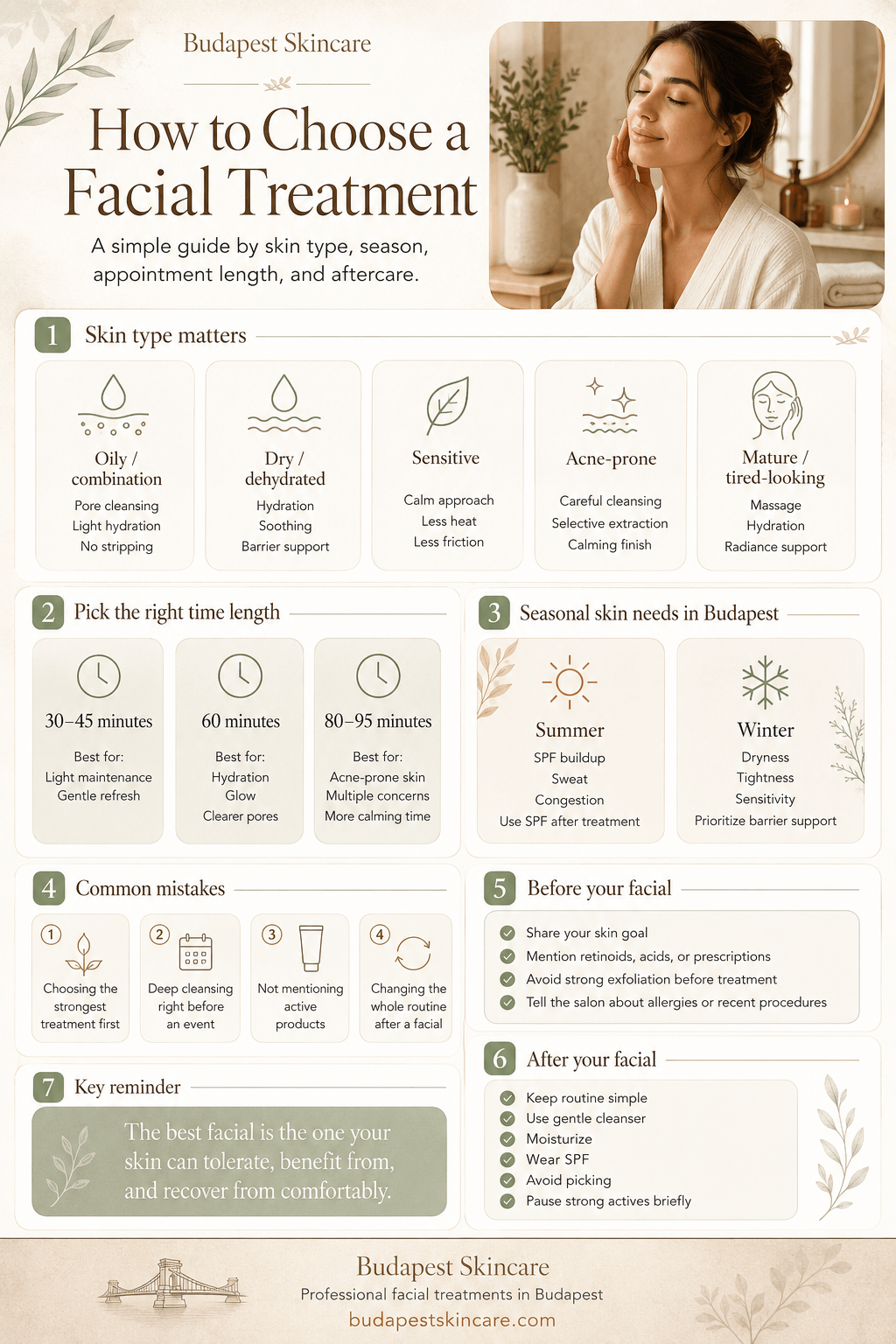
The simplest way to choose a facial is to start with your main skin goal. Your skin goal should come before the treatment name, because the same facial can feel very different depending on skin type, sensitivity, season, and product tolerance.
In practice, many clients arrive with a treatment in mind, but the better choice becomes clear after looking at the skin. A skin that feels oily may still be dehydrated. A skin with blackheads may also have a weakened barrier. A skin that looks dull may need gentle exfoliation rather than a strong treatment.
A good decision process has three steps. First, define your skin goal. Second, match that goal with your skin type and sensitivity level. Third, choose a treatment length that gives enough time for the skin to be properly prepared, treated, and calmed.
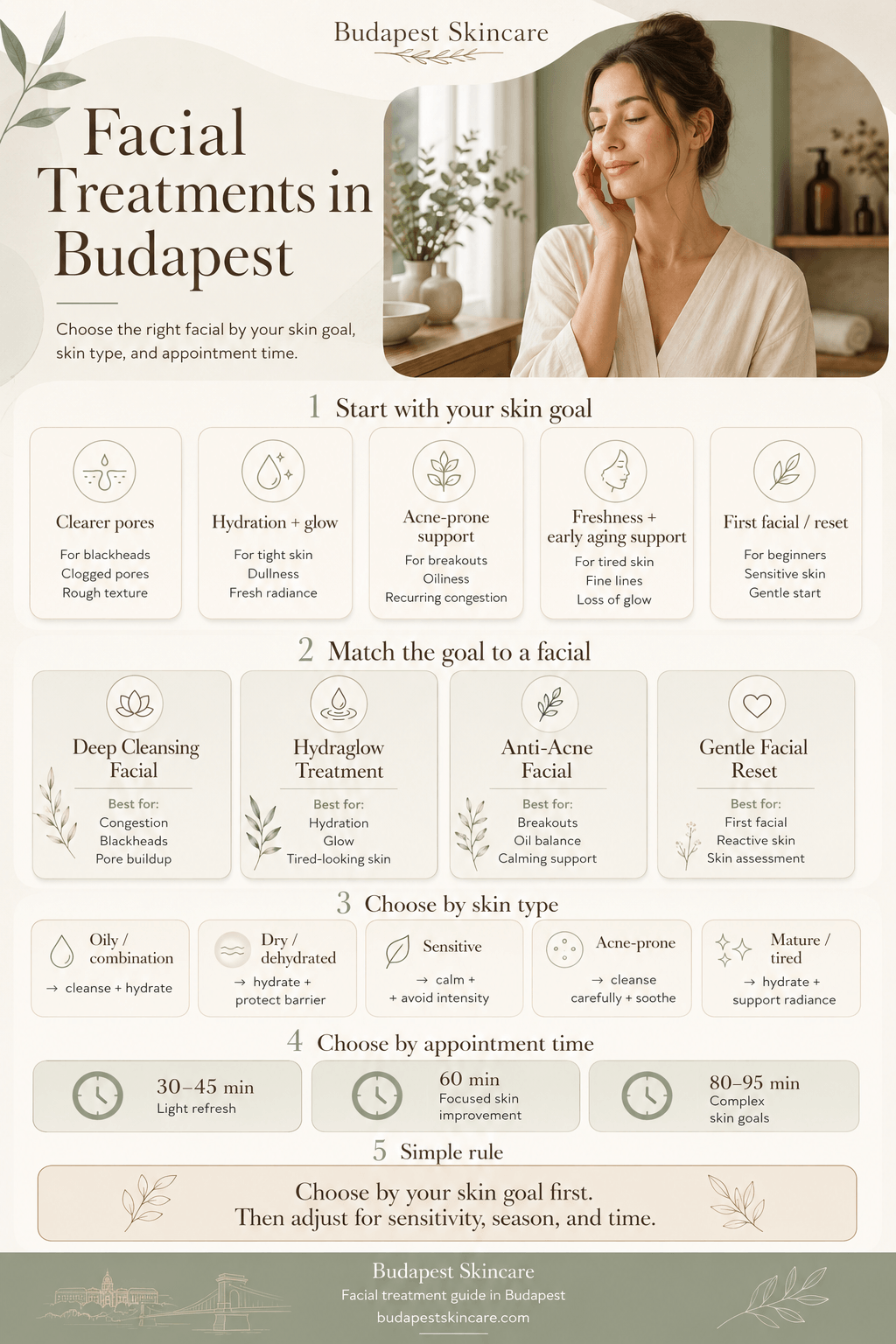
Quick Decision Guide: Choose by Skin Goal
The right facial depends on what you want your skin to look and feel like after the appointment. Most people are looking for clearer pores, better hydration, a calmer skin feel, more glow, or support for early aging changes.
If Your Goal Is Clearer Pores and Less Congestion
Choose a deep cleansing focused facial when your main concern is blackheads, clogged pores, rough texture, or a heavy feeling on the skin. This type of facial usually focuses on cleansing, softening the skin, gentle exfoliation, extractions when suitable, soothing, and hydration.
In Budapest, city-center dust, pollution, daily commuting, sweat, and SPF can all contribute to surface buildup. This does not mean the skin is dirty. It means consistent cleansing and occasional professional deep cleansing can be useful for skin that congests easily.
A relevant option is the Deep Cleansing Facial Treatment - enzyme treatment, steaming, intensive deep cleansing, soothing pack, hydration. This is usually more suitable when the skin needs a focused pore-cleansing session rather than only a light refresh.
If Your Goal Is Hydration and Glow
Choose a hydrating facial when your skin feels tight, looks tired, or lacks bounce. Dehydrated skin can appear dull, even when it is oily in the T-zone.
Many people in Budapest notice more dehydration in winter because cold wind and indoor heating can stress the skin barrier. In summer, sweat, sun protection, and frequent cleansing can also leave the skin feeling unbalanced. A hydration-focused facial supports comfort, glow, and a smoother-looking surface.
A relevant option is the Hydraglow Treatment - Hydraglow + ultrasound, oxygen therapy, LED therapy. This type of appointment is usually considered when the goal is freshness, hydration, and a more radiant-looking finish without strong downtime.
If Your Goal Is Support for Acne-Prone or Problematic Skin
Choose an acne-support facial when your skin is prone to breakouts, clogged pores, excess oil, and recurring congestion. A professional facial can help support cleansing, oil balance, calming, and barrier care, but it does not diagnose or medically treat acne.
In practice, acne-prone skin often needs consistency more than intensity. Strong scrubbing, frequent acids, and aggressive extraction can make the skin feel more irritated. A careful treatment plan is usually better than doing too much in one appointment.
For a deeper comparison of congestion, inflammation and barrier stress, read our acne treatment guide for Budapest.
A relevant option is the Anti-Acne Facial Treatment - Facial cleansing, enzymatic and pore-cleansing peeling, cleansing serum and soothing mask, vitamin C serum, oil-balancing mask, barrier cream, sun protection, High Frequency device, LED therapy. If breakouts are painful, worsening quickly, cystic, or leaving significant marks, a dermatologist should be consulted.
If Your Goal Is Early Anti-Aging and Skin Freshness
Choose a rejuvenating or skin-support facial when your main concerns are tired-looking skin, fine lines caused by dehydration, loss of glow, or uneven texture. These treatments usually focus on hydration, massage, peptides or supportive serums, and technologies that improve the look of firmness and radiance.
Professional facials cannot stop aging or create permanent lifting. They can support skin quality, smoother texture, and a fresher appearance when combined with steady home care and sun protection.
If Your Goal Is a First Facial or a Reset
Choose a gentle introductory facial when you are new to professional skincare or unsure how your skin reacts. A first facial should not feel like a test of endurance. It should help the professional understand your skin and help you understand what your skin tolerates.
For first-time clients, a moderate approach is often best. The skin can be cleansed, assessed, softened, treated, and hydrated without overloading it with too many active steps.
Choose by Skin Type
Your skin type affects how a facial should be performed. The same skin goal needs a different method on oily, dry, sensitive, or combination skin.
Oily and Combination Skin
Oily and combination skin often benefits from pore-focused cleansing, gentle exfoliation, and lightweight hydration. The goal is not to remove all oil. The goal is to reduce congestion while keeping the skin barrier comfortable.
A common mistake we see is using harsh cleansers because the skin feels shiny. This can create a tight feeling after washing and may lead to more imbalance. Oily skin still needs hydration and barrier support.
Dry or Dehydrated Skin
Dry skin lacks oil, while dehydrated skin lacks water. Both can feel tight, rough, or less flexible, but they need slightly different support. A facial for this skin type should focus on gentle cleansing, hydration, soothing, and barrier-friendly finishing products.
Budapest tap water can be harder in many areas because it contains minerals such as calcium and magnesium. Hard water can contribute to a tight or stripped feeling after cleansing. Gentle cleansers, careful rinsing, and barrier-supporting moisturizers are especially helpful for this skin profile.
Sensitive or Easily Reddened Skin
Sensitive skin needs a calm, conservative facial. The treatment should avoid unnecessary friction, excessive heat, strong exfoliation, and too many active ingredients in one session.
If the skin is currently burning, peeling, reacting strongly, or irritated from home products, it is usually better to simplify the routine before doing a more active treatment. If redness is persistent, painful, or medically concerning, a dermatologist should assess it.
Acne-Prone Skin
Acne-prone skin needs a careful balance between cleansing and calming. The facial should support the look and feel of clearer skin without creating extra irritation.
Extractions should be done only when appropriate. Not every bump should be extracted. Inflamed or painful areas may need to be avoided to reduce unnecessary stress on the skin.
Mature or Tired-Looking Skin
Mature or tired-looking skin often benefits from hydration, massage, supportive serums, and texture-refining steps. The goal is to improve the appearance of smoothness, comfort, and radiance.
Fine lines often look more visible when the skin is dehydrated. A professional facial can make the skin look fresher, but lasting improvement depends on home care, sun protection, sleep, and regular skin maintenance.
Choose by Appointment Time
Appointment time matters because some skin goals need more preparation and calming. A quick facial can refresh the skin, but deeper pore work and layered care usually need more time.
30 to 45 Minutes: Best for Light Maintenance
A shorter facial is usually best for people who want a refresh, gentle cleansing, light hydration, or a simple skin maintenance appointment. It can be useful before an event if the skin is already calm and not easily reactive.
A short treatment is usually not the best choice for heavy congestion or recurring breakouts. There may not be enough time for proper softening, careful extraction, soothing, and finishing steps.
60 Minutes: Best for Focused Skin Improvement
A 60-minute facial is often a practical choice for clearer pores, hydration, glow, or maintenance with more detail. It gives more time for preparation, treatment steps, and calming the skin before you leave.
Many clients find that 60 minutes is the most balanced option when they want visible freshness without choosing a long appointment. It can also be a good choice when the skin is not extremely reactive and the goal is clear.
80 to 95 Minutes: Best for Complex Skin Goals
A longer facial is usually better when the skin has several needs at once. Examples include congestion with sensitivity, acne-prone skin with barrier stress, or tired-looking skin that needs hydration and supportive finishing steps.
Longer appointments can allow a more complete sequence. More time does not mean the treatment should be more aggressive. It means there is more space to work carefully.
What to Expect During a Professional Facial in Budapest
A professional facial usually begins with a short consultation. The therapist should ask about your current routine, sensitivities, recent treatments, skin goals, and any products that may affect your skin tolerance.
The treatment normally includes cleansing and skin preparation. Depending on the facial, it may also include exfoliation, steaming, extraction, massage, mask application, serum, device-based support, moisturizer, and sun protection.
In a professional skincare setting, the treatment should be adapted during the appointment. If the skin becomes too reactive, the intensity should be reduced. If the skin needs calming more than exfoliation, the plan should change.
What a Facial Can Help With
A facial can help improve the appearance and feel of the skin. It can support smoother texture, clearer-looking pores, better hydration, a fresher glow, and a calmer skin feel.
A facial can also help you understand your skin better. Many clients discover that their skin is not simply oily, dry, or sensitive. It may be oily and dehydrated, dry and congested, or acne-prone and barrier-stressed.
Professional care can also make home care more focused. When the skin is assessed properly, it is easier to avoid unnecessary products and choose a routine that supports the treatment result.
What a Facial Does Not Do
A facial does not replace dermatological care. It should not be used as medical treatment for severe acne, infections, allergic reactions, suspicious lesions, or sudden unexplained skin changes.
A facial does not create permanent results from one session. Skin changes with hormones, stress, sleep, diet, weather, cleansing habits, and product use. Consistency matters more than one intense treatment.
A facial should not be expected to remove all blackheads forever. Pores naturally produce oil. The goal is to manage congestion and support a clearer-looking skin surface over time.
How Often Should You Get a Facial?
Most people choose a professional facial every 4 to 6 weeks for regular maintenance. This timing is common because the skin changes gradually and needs time between treatments.
Congested or acne-prone skin may need a more structured plan at the beginning. Sensitive or barrier-stressed skin may need longer gaps and gentler appointments. The right rhythm depends on skin response, lifestyle, season, and home care.
Before an event, avoid trying a strong new facial immediately beforehand. If your skin is reactive, plan at least one to two weeks ahead. If your skin is used to treatments and you only want glow and hydration, timing may be more flexible.
Seasonal Considerations in Budapest
Budapest has hot, often humid summers and cold, windy winters. This seasonal shift can change what your skin needs from a facial.
Summer Skin Needs
In summer, many people notice more sweat, more SPF buildup, and more congestion. A pore-cleansing or refreshing hydrating facial can be helpful when the skin feels heavy or dull.
Sun exposure also increases the need for caution. Strong exfoliation may not be suitable if the skin is sunburned, irritated, or recently exposed to intense sun. Sun protection is important after any facial that includes exfoliating steps.
Winter Skin Needs
In winter, many people notice dryness, flaking, tightness, and sensitivity. Cold wind and indoor heating can make the skin barrier feel weaker.
Winter facials often need more hydration and calming. Strong exfoliation may need to be reduced if the skin is already dry or reactive. Barrier support should be a priority during colder months.
Common Mistakes When Choosing a Facial
One common mistake is choosing the strongest-sounding treatment first. Stronger is not always better. The best facial is the one your skin can tolerate and benefit from safely.
Another common mistake is booking a deep cleansing facial immediately before an important event. Extractions can leave temporary redness. If you have an event, choose timing that allows the skin to settle.
A third mistake is not mentioning active home products. Retinoids, exfoliating acids, benzoyl peroxide, strong vitamin C, and recent peels can affect skin sensitivity. Your therapist needs this information to adjust the treatment.
A fourth mistake is changing the entire home routine immediately after a facial. The skin often does best with simple, steady aftercare. Too many new products can make it harder to know what caused irritation.
How to Prepare for a Facial
Arrive with clean skin if possible, but do not worry if you are coming from work. A professional facial includes cleansing. The more important preparation is sharing accurate information about your skin and routine.
Avoid strong exfoliation for a few days before your appointment unless your therapist has advised otherwise. Avoid using multiple active ingredients right before a treatment. This helps reduce the chance of unnecessary sensitivity.
Tell the salon if you are pregnant, using prescription skin products, have had recent aesthetic procedures, or have a known allergy. This does not always mean you cannot have a facial. It means the treatment may need to be adapted or postponed.
Aftercare Basics
After a facial, keep your routine simple for at least 24 to 48 hours unless you receive different professional guidance. Use a gentle cleanser, moisturizer, and sun protection during the day.
Avoid strong exfoliants, scrubs, retinoids, and aggressive active products immediately after a more active facial. The skin needs time to settle, especially after extraction, peeling, or device-supported steps.
Do not pick at the skin after extractions. Temporary redness can happen after cleansing work. Picking can increase irritation and make the skin look more inflamed.
FAQ: Facial Treatments in Budapest
What should I expect during my first facial treatment in Budapest?
During your first facial treatment in Budapest, you should expect a consultation, skin assessment, cleansing, and treatment steps based on your skin goal. The therapist may adjust the facial if your skin appears sensitive, congested, dehydrated, or reactive on the day.
A first facial should feel clear and well-paced. You should understand what is being done, why it is being done, and what to avoid afterward. Results vary, but many people notice cleaner, fresher, or more comfortable skin after an appropriate treatment.
How should I prepare before booking a facial?
Before booking a facial, think about your main skin goal and your available time. Tell the salon if your skin is sensitive, if you use strong active products, or if you have had recent cosmetic or dermatological procedures.
If you are unsure which treatment to choose, it is usually better to choose based on your concern rather than the treatment name. For example, choose a cleansing-focused option for congestion, a hydration-focused option for tightness, and a gentler option if your skin is reactive.
Can I get a facial if I have breakouts?
You can often get a facial if you have breakouts, but the treatment should be adapted to the condition of the skin. Inflamed, painful, or medically concerning acne should be assessed carefully, and some areas may be avoided during extraction.
A professional facial can support acne-prone skin with cleansing, calming, and oil-balancing care. It should not be described as a cure for acne. Persistent or severe acne needs dermatological advice.
Which facial is best before an event?
The best facial before an event is usually a treatment your skin already tolerates. Hydration and glow-focused facials are often safer close to an event than intense extraction-based treatments.
If you want deep cleansing before an event, plan it earlier. This gives temporary redness or sensitivity time to settle. Reactive skin should be treated with extra caution before important occasions.
Is a facial suitable for men?
A facial is suitable for men when the treatment is matched to the skin. Men often seek help with congestion, shaving-related irritation, oiliness, dehydration, or dullness.
The decision process is the same for all clients. The best treatment depends on skin goal, skin type, sensitivity, and the amount of time available for the appointment.
A Practical Way to Choose Your Treatment
If your skin feels clogged, choose a cleansing-focused facial. If your skin feels tight or dull, choose a hydration-focused facial. If your skin breaks out often, choose a structured acne-support facial and keep expectations realistic.
If your skin is sensitive, choose the gentler option first. If your skin has several concerns, choose a longer appointment so the treatment does not need to be rushed. If you are unsure, a professional skin assessment can help narrow the choice before stronger steps are used.
For clients comparing facial treatments near Corvin or in central Budapest, it can be helpful to describe your skin goal when contacting the salon rather than choosing only by treatment name. This makes it easier to match your skin type, timing, and tolerance to an appropriate facial.
The best facial treatment is the one that matches your skin goal, skin type, sensitivity, season, and available time. A thoughtful facial treatments budapest guide should make the choice clearer, not more complicated, and should support realistic expectations for healthy-looking, comfortable skin.