Massage in Budapest can mean very different experiences, from firm Thai stretching to gentle aroma oil relaxation, targeted neck work, lymphatic drainage, foot massage and premium full-body treatments. The best choice depends on your goal, your preferred pressure, your comfort with stretching, and how much recovery time you want afterward.
A massage is a hands-on body treatment that uses pressure, rhythm, stretching or oil-based strokes to support relaxation, ease everyday tension and improve body comfort. It is suitable for many people, but the right style should match your body, lifestyle and current condition.
This guide compares the main massage types you are likely to see when searching for massage in Budapest. It also links naturally to our broader pillar guide, Massage in Budapest: Complete Guide to Thai, Deep Tissue, Swedish, Oil, Lymphatic and Relaxing Massage, for readers who want a wider overview of treatment styles and decision points.
Quick Answer: Which Massage in Budapest Should You Choose?
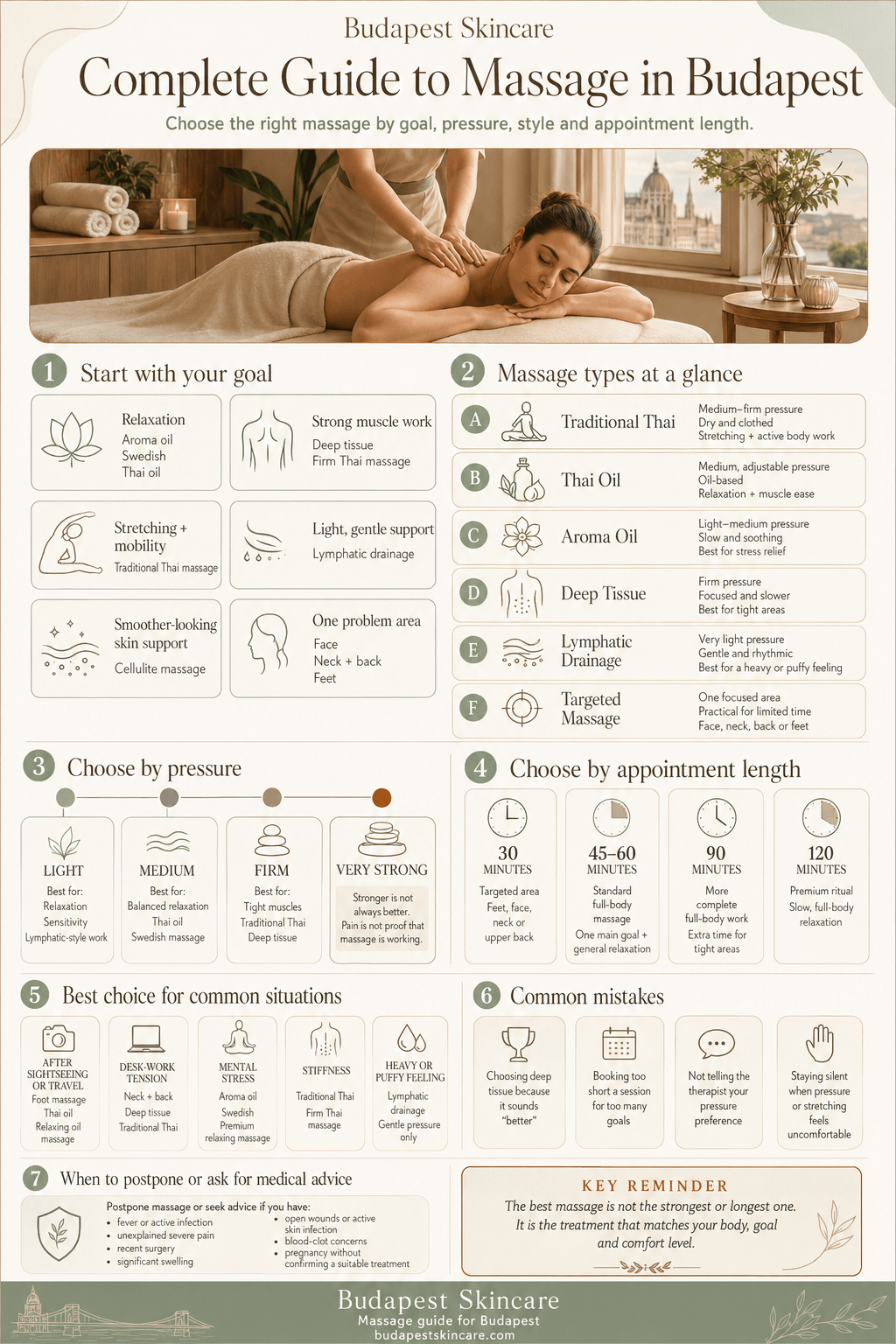
Choose traditional Thai massage if you want a clothed, active treatment with stretching and firm pressure. Choose Thai oil or aroma oil massage if you want a smoother full-body experience with oil and more relaxation.
Choose deep tissue massage if your goal is stronger pressure for everyday muscle tension. Choose lymphatic drainage massage if you prefer gentle, rhythmic work that can help the body feel lighter, especially when you feel puffy or heavy.
Choose a targeted face, neck, back or foot massage if you have a clear area of discomfort or limited time. Choose a premium full-body experience if you want a slower, more complete treatment with a more indulgent atmosphere.
Massage Types Compared by Pressure, Goal, Duration and Feel
The easiest way to compare massage types is to look at pressure and purpose first. Duration matters, but a longer massage is not always better if the style does not match your goal.
| Massage type | Typical pressure | Best for | Typical feel |
|---|---|---|---|
| Traditional Thai massage | Medium to firm | Stiffness, mobility, active stretching | Dry, clothed, dynamic |
| Thai oil massage | Medium, adjustable | Relaxation with some muscle work | Oil-based, flowing, balanced |
| Aroma oil massage | Light to medium | Stress relief, calm, gentle full-body relaxation | Soft, slow, soothing |
| Swedish massage | Light to medium | General relaxation and easy muscle comfort | Classic gliding strokes |
| Deep tissue massage | Firm to strong | Persistent everyday tension and tight areas | Focused, slower, more intense |
| Lymphatic drainage massage | Very light to light | Puffiness, heavy feeling, gentle de-bloating support | Rhythmic, gentle, repetitive |
| Cellulite massage | Medium to vigorous | Smoother-looking skin support, circulation-focused body work | Energising, targeted, stimulating |
| Maderotherapy massage | Medium to firm, adjustable | Targeted wooden-tool body work and temporary smoother-looking skin support | Rhythmic, stimulating, sculpting-focused |
| Face massage | Light to medium | Facial tension, jaw area, relaxation | Delicate, calming, precise |
| Neck and back massage | Medium to firm | Desk posture, upper-body tightness | Targeted and practical |
| Foot massage | Light to firm | Tired feet, walking, travel days | Grounding, focused, relaxing |

Traditional Thai Massage: Best for Stretching and Active Body Work
Traditional Thai massage is usually performed without oil and with the client wearing comfortable clothing. It often combines pressure, assisted stretching and rhythmic body work.
This style suits people who enjoy a more active massage. It can be a good option if you feel stiff from office work, long walking days, travel or regular training.
Traditional Thai massage is not usually the best first choice if you want a quiet, oil-based relaxation treatment. It may also feel too active if you are very tired, sensitive to pressure or not comfortable with stretching.
Who traditional Thai massage is for
- People who like firm, structured body work.
- People who feel stiff rather than simply tired.
- People who prefer a dry massage without oil.
- People who want stretching as part of the experience.
What to expect
In practice, traditional Thai massage can feel more physical than a classic relaxing massage. Many clients describe it as energising rather than sleepy.
Pressure should still be adjusted to your comfort. A professional setting should allow you to say if a stretch or pressure point feels too much.
Thai Oil Massage: Best for Balanced Relaxation and Muscle Ease
Thai oil massage usually combines oil-based strokes with some of the pressure and rhythm associated with Thai body work. It is often easier to receive than traditional Thai massage because it is less stretch-focused.
This massage type is a good middle choice when you want relaxation but do not want very light pressure. It can feel calming while still giving attention to tired muscles.
People often choose Thai oil massage when they want a full-body treatment after busy workdays, travel or long periods of sitting. It can also suit visitors who want a familiar oil massage with a slightly firmer structure.
Who Thai oil massage is for
- People who want oil-based massage with medium pressure.
- People who want relaxation and some tension relief.
- People who find traditional Thai massage too active.
- People who prefer a full-body treatment rather than one targeted area.
Aroma Oil Massage: Best for Calm, Stress Relief and Gentle Relaxation
Aroma oil massage is usually a softer oil-based massage that uses gentle rhythm and calming scents. The main goal is comfort, relaxation and nervous system ease rather than intense muscle work.
This style is often a good choice for first-time massage clients. It is also suitable when you feel mentally overloaded and want a quiet, gentle experience.
Aroma oil massage is not designed for very deep pressure. If you want strong work on tight shoulders or hips, deep tissue or a more targeted massage may suit you better.
Who aroma oil massage is for
- People who want light to medium pressure.
- People who prefer a soothing atmosphere.
- People who are stress-sensitive or new to massage.
- People who want a relaxing full-body experience.
Swedish Massage: A Classic Choice for General Relaxation
Swedish massage is a classic oil-based massage style that typically uses gliding strokes, kneading and gentle rhythm. You may see Swedish massage listed at many massage studios in Budapest.
This style is usually suitable for people who want an easy, familiar massage and do not need very specific therapeutic-style pressure. It is often chosen for general relaxation and everyday muscle comfort.
Swedish massage can overlap with aroma oil or relaxing oil massage in how it feels. The main difference is that Swedish massage is usually described by its technique, while aroma oil massage is often described by its calming sensory experience.
Deep Tissue Massage: Best for Firm Pressure and Tight Areas
Deep tissue massage uses slower and firmer pressure to focus on deeper-feeling muscle tension. It is often chosen by people who like strong massage and want concentrated work on tight areas.
This treatment is not the same as simply pressing as hard as possible. Good deep tissue work should feel controlled, specific and adjustable.
Many clients ask for deep pressure because they think stronger always means better. In practice, pressure that is too intense can make the body tense up, which can reduce comfort and make the treatment less useful.
Who deep tissue massage is for
- People who prefer firm or strong pressure.
- People with everyday muscle tension from desk work or exercise.
- People who want focused work rather than a purely relaxing massage.
- People who can communicate clearly about pressure during the treatment.
What to expect after deep tissue massage
After deep tissue massage, the body may feel looser, warm or slightly tired. Some people feel mild tenderness the next day, especially if they are not used to firm massage.
Deep tissue massage should not create sharp pain, numbness or bruising as a goal. If something feels wrong during treatment, you should speak up immediately.
Lymphatic Drainage Massage: Best for Gentle, Light and De-Bloating Support
Lymphatic drainage massage uses very light, rhythmic and repetitive movements. It is much gentler than deep tissue massage and should not feel like strong muscle work.
People often choose lymphatic drainage when they feel puffy, heavy or sluggish. It is also popular as a slimming-style or de-bloating massage, although visible results vary and depend on the body, lifestyle and consistency.
Lymphatic drainage massage is not a medical treatment. If you have sudden swelling, pain, unexplained fluid retention, heart or kidney concerns, active infection, recent surgery or a diagnosed medical condition, you should speak with a healthcare professional before booking.
Who lymphatic drainage massage is for
- People who prefer very gentle pressure.
- People who feel heavy or puffy after travel, heat or long sitting.
- People who want a light relaxation treatment rather than muscle release.
- People who understand that results vary and are not permanent.
Cellulite Massage: Firm, Targeted Work for Thighs, Hips and Buttocks
At Budapest Skincare, Cellulite Massage in Budapest is a 60-minute, firm-pressure treatment focused on the thighs, hips and buttocks rather than a full-body routine. The therapist uses warming oil with deep kneading, skin rolling and wringing techniques to warm the tissue and stimulate local circulation.
This treatment is designed to leave the skin feeling temporarily smoother, firmer and more even to the touch. It does not remove fat or permanently eliminate cellulite, and results vary. It is best suited to people who are comfortable with vigorous pressure and want to build a regular body-care routine alongside movement and hydration.
The 60-minute treatment is currently 14,900 HUF / 42 EUR, reduced from 16,900 HUF / 47 EUR, in a private treatment room in Budapest District 7. Temporary warmth or redness can be normal afterward. Avoid firm cellulite massage over painful varicose veins, active irritation or inflammation, and check with a healthcare professional first if you are pregnant, take blood thinners, bruise easily or have a condition affecting circulation.
How often cellulite massage is usually chosen
One session may leave the treated area feeling smoother for a short time. For a more noticeable change in how the area feels, many clients choose one or two sessions per week for several weeks, then adjust the rhythm with the therapist. Consistency usually matters more than asking for maximum pressure.
See the full cellulite massage protocol, current price and online booking details.
Maderotherapy Massage: Targeted Wooden-Tool Body Work
Maderotherapy massage in Budapest combines manual warm-up movements with specially shaped wooden rollers and sculpting tools on selected areas such as the thighs, legs, hips, abdomen or arms.
It is a stimulating wellness and cosmetic massage for clients who want targeted body care, a lighter body feeling or temporarily smoother-looking skin. Pressure and treatment areas should be adapted to your comfort, and results vary; it is not a weight-loss or medical treatment.
Choose 60 minutes for a focused first session or fewer target areas, and 90 minutes when you want more time across several areas.
Targeted Massage Options: Face, Neck, Back and Foot
Targeted massage is useful when you know exactly where you need attention. It is also practical when you have limited time and do not want a full-body treatment.
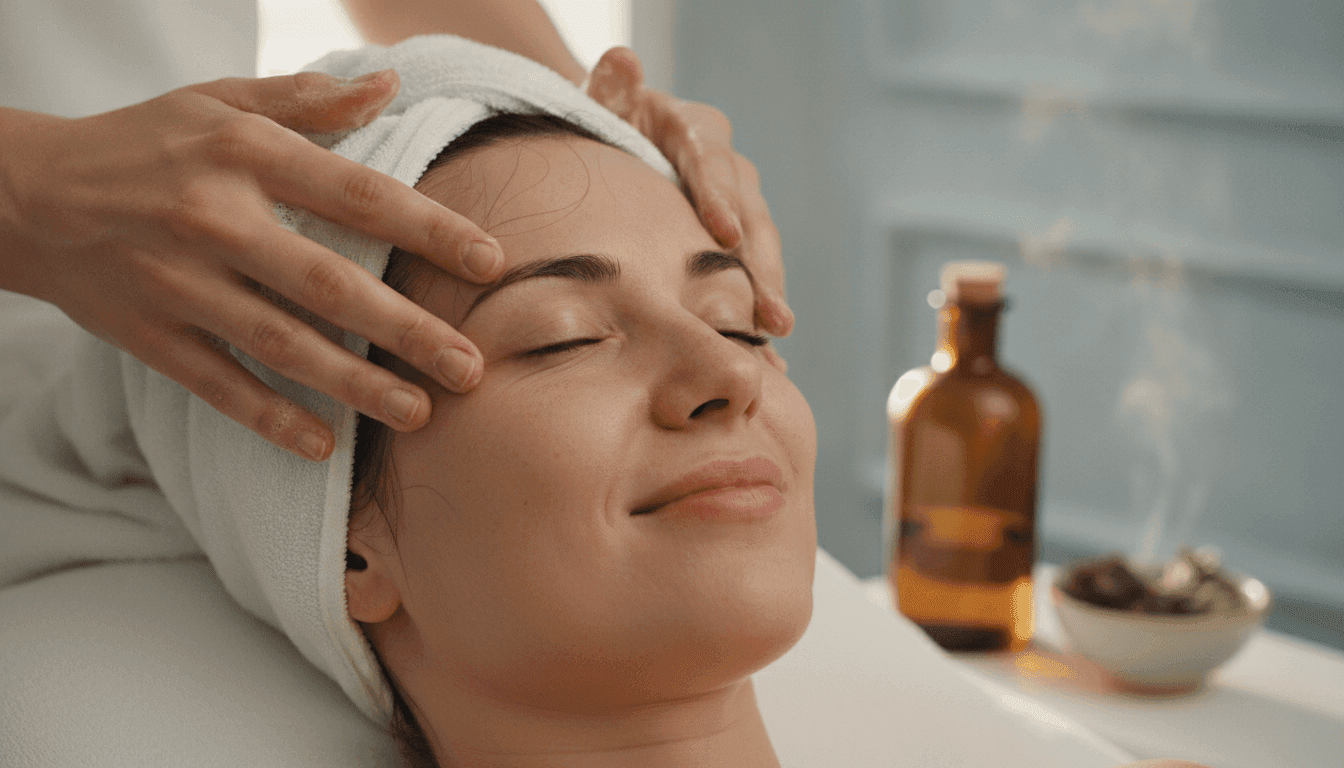
A face massage can support relaxation in the facial muscles, jaw area, head, neck and décolleté. It is usually gentle and calming, and it may suit people who hold tension in their expression or jaw.
A head, neck and back massage is often chosen by people who work at a computer, carry shoulder tension or feel tight through the upper body. In Budapest city life, long office hours, commuting and phone posture often make this type of massage especially relevant.
A foot massage can be a good choice after long walking days, travel or standing work. Many locals and visitors in Budapest choose foot-focused treatments when they want relaxation without committing to a full-body massage.
Premium Full-Body Experiences: Best for Time, Atmosphere and Reset
A premium full-body massage experience is usually chosen for more than muscle tension. The goal is often to slow down, feel cared for and enjoy a more complete treatment atmosphere.
This type of experience may suit people who want quiet time, a gift treatment, a special occasion or a deeper pause from a busy schedule. It can also be helpful when you do not have one clear problem area and simply want overall relaxation.
Premium does not automatically mean the pressure is stronger. It usually means the treatment feels more complete, slower or more atmosphere-led.
How to Choose by Goal
Your goal should guide your massage choice before price or duration. A short targeted treatment can be better than a long full-body massage if your goal is specific.
If you want relaxation
Choose aroma oil massage, Swedish massage, Thai oil massage or a premium relaxing full-body treatment. These styles usually feel smoother, calmer and more suitable when you want to switch off.
If you want strong pressure
Choose deep tissue massage or a firmer Thai massage style. Tell the therapist your preferred pressure before the treatment starts and give feedback during the session.
If you want stretching
Choose traditional Thai massage. This style usually feels more active and may suit people who like movement-based body work.
If you feel puffy or heavy
Choose lymphatic drainage massage if gentle, rhythmic work fits your body. Avoid treating unexplained swelling as a salon issue, because sudden or painful swelling should be checked medically.
If you want visible body-smoothing support
Choose cellulite massage if you are comfortable with vigorous pressure and understand that results vary. A course of sessions is usually more realistic than expecting a major change from one appointment.
If you have one problem area
Choose a targeted neck, back, foot or face massage. This is often the most efficient option when your time is limited.
How to Choose by Pressure Level
Light pressure is best for relaxation, sensitivity, lymphatic-style work and first-time clients who feel unsure. Light massage can still feel effective when the goal is calm and comfort.
Medium pressure is best for people who want a balanced massage. Thai oil, Swedish and relaxing oil styles often sit in this middle range.
Firm pressure is best for people who know they enjoy stronger body work. Traditional Thai and deep tissue massage are common choices when the body feels tight.
Very strong pressure is not suitable for everyone. Pain is not proof that a massage is working, and excessive pressure can make the body guard or feel uncomfortable afterward.
How Long Should a Massage Be?
A 30-minute massage is usually best for a targeted area, such as feet, face, neck or upper back. It can be helpful when you want quick relief or a short reset.
A 45 to 60-minute massage is a common choice for one main area plus some general relaxation, or for a standard full-body treatment. Many people choose this length for regular maintenance.
A 90-minute massage gives more time for full-body work, slower transitions and extra attention to tight areas. It often feels more complete for people with several areas of tension.
A 120-minute treatment is usually more of a premium or ritual-style experience. It is best when the goal is deep relaxation and enough time to fully slow down.
How Often Should You Get a Massage?
For general relaxation, many people choose massage every 3 to 6 weeks. This rhythm can support consistency without feeling excessive.
For ongoing muscle tension from desk work, training or stress, some people prefer every 1 to 3 weeks for a period of time. The ideal rhythm depends on pressure tolerance, lifestyle and how your body responds.
For lymphatic drainage or cellulite-focused massage, a short course may be chosen when the goal is more visible or body-feel related. Results vary, and maintenance often matters.
For occasional stress relief, booking only when you feel overloaded can still be useful. A massage does not have to be part of a strict routine to be valuable.
When to Avoid or Postpone Massage
Massage should be postponed if you have fever, active infection, contagious illness or unexplained severe pain. A salon massage is not the right setting for acute medical concerns.
You should be cautious with massage if you have recent surgery, blood clot history, significant swelling, uncontrolled blood pressure, serious heart concerns, active skin infection, open wounds or painful varicose veins. Ask a healthcare professional if you are unsure.
Pregnancy requires extra care and appropriate positioning. Always mention pregnancy before booking so the salon can confirm whether a suitable treatment is available.
If you are taking medication that affects bruising or skin sensitivity, choose gentler pressure and tell the therapist before the session. Safety and comfort should guide the treatment.
What to Expect at a Professional Massage Appointment in Budapest
A professional massage appointment should begin with basic questions about pressure preference, focus areas and any relevant health considerations. This helps the treatment match your body rather than follow a rigid routine.
You should be given clear instructions about clothing, draping and positioning. You should also feel able to ask questions before the massage begins.
During the massage, communication matters. You can ask for lighter pressure, stronger pressure, less stretching, more warmth or a change in focus area.
After the massage, you may feel relaxed, warm, sleepy or lighter. If the massage was firm, you may also feel some mild next-day tenderness.
How to Prepare Before Booking
Before booking massage in Budapest, decide your main goal in one sentence. Examples include: I want to relax, I need firm shoulder work, I want stretching, I feel puffy, or I want a premium full-body experience.
Choose the pressure level you honestly enjoy, not the pressure level you think you should tolerate. A good massage should feel productive, not punishing.
Avoid heavy meals immediately before treatment. Arrive with enough time to settle, especially if you are visiting a new salon or coming from another part of the city.
Tell the salon before the appointment if you are pregnant, have injuries, recent surgery, skin irritation or medical concerns. This allows the team to advise whether the chosen massage is appropriate in a non-medical salon setting.
Common Mistakes When Choosing a Massage
A common mistake is choosing deep tissue massage only because it sounds more effective. Firm pressure is useful for some people, but it is not automatically better than medium or light pressure.
Another common mistake is booking a relaxing massage and expecting intensive work on long-term tightness. Relaxation massage can feel wonderful, but it may not be focused enough for specific muscle tension.
Some clients choose too short a session for too many goals. A 30-minute treatment cannot realistically deliver full-body relaxation, deep shoulder work and leg focus all at once.
Another mistake is not speaking up during the treatment. Therapists work better when they know what you feel, especially with pressure, stretching and sensitive areas.
Local Context: Why Massage Is Popular in Budapest
Budapest is a city where many people combine office work, commuting, walking, training and travel. This lifestyle often creates a mix of shoulder tension, tired legs and general fatigue.
Visitors often search for massage in Budapest after sightseeing, flights or long walking days. Locals often search when desk posture, stress or regular exercise starts to show up in the body.
Season can influence massage choice. In cold and windy winters, many people prefer warming oil-based or firmer treatments, while in hot summers, lighter lymphatic-style sessions can feel more comfortable for some clients.
Examples of Clearly Defined Massage Options
When comparing local services, clear duration, pressure style and treatment purpose make the decision easier. A transparent menu helps you choose based on your goal rather than guessing by name alone.
At Budapest Skincare near Corvin, relevant examples include Traditional Thai Massage (60 min) - 9,900 HUF, which suits people who prefer a dry and more active style. This is usually a better match for stretching and stiffness than for quiet oil-based relaxation.
Another example is Deep Tissue Thai Massage (60 min) - stronger pressure for muscle tension - 14,900 HUF. This option suits people who already know they like firmer massage and want focused body work.
For a gentler body-feel goal, Lymphatic Drainage Massage (60 min) - gentle, rhythmic strokes that ease puffiness and fluid retention, leaving the body feeling lighter and looking more contoured. Often chosen as a slimming-style, de-bloating massage. Results vary - 17,900 HUF.
FAQ: What Should I Expect During My First Massage?
During your first massage, you should expect a short consultation, a clear explanation of the treatment and privacy while you prepare. The therapist should ask about pressure preference, focus areas and any contraindications.
The massage itself should feel comfortable enough for you to breathe normally and relax into the treatment. Firm pressure can feel intense, but it should not feel sharp, alarming or impossible to tolerate.
FAQ: How Should I Prepare Before Booking a Massage in Budapest?
Before booking, choose your main goal, preferred pressure and ideal duration. If you are unsure, start with a balanced oil massage, targeted massage or a shorter session rather than choosing the strongest option immediately.
Share important information before the session, including pregnancy, injury, recent procedures, skin irritation or medical concerns. A professional salon can adapt within safe limits, but medical problems should be discussed with a healthcare professional.
Soft Next Step: How to Use This Guide Before You Choose
If you are comparing massage options, start with three questions: Do I want relaxation or focused pressure, do I prefer oil or dry massage, and do I want full-body work or one targeted area. These answers usually make the best choice clear.
If you are unsure between two treatments, choose the gentler or more balanced option first. You can always increase pressure or choose a more intensive style at a later appointment if your body responds well.
Summary
Massage in Budapest is easiest to choose when you match the treatment to your goal, pressure preference, duration and comfort level. Thai massage suits stretching and active body work, oil-based styles suit relaxation, deep tissue suits firm pressure, lymphatic drainage suits gentle de-bloating support, and targeted treatments suit specific areas. Results and comfort vary by person, so the best massage is the one that fits your body on the day of the appointment.