

Aftercare after acne treatment facial matters most in the first 24–48 hours. Your skin is usually cleaner, more active, and sometimes slightly reactive, so your routine should be simpler than usual.
This checklist focuses on acne-prone skin after extractions, deep cleansing, and calming steps. It also links back to the bigger picture of professional acne support in our pillar guide: Acne Treatment in Budapest: Professional Facial Options for Acne-Prone Skin.
What “aftercare after acne facial” means (and why it matters)
Aftercare after an acne facial is a short, protective routine that supports your skin barrier while your pores settle. It is designed to reduce irritation, limit new congestion, and help your skin stay calm after cleansing and extractions.
An acne facial can temporarily increase sensitivity because of steaming, exfoliation, and manual work around clogged pores. Mild redness, a tight feeling, or small bumps can happen, especially if you do too much at home afterward.
Aftercare is not a “fix” for acne. It is a practical way to avoid preventable flare-ups and help your results look cleaner and more even over the next few days.
The 24–48 hour aftercare checklist (acne-specific)
Use this as a simple decision tool. If your skin feels warm, stingy, or tight, choose the gentlest option in each step.
First 6 hours: keep it calm and hands-off
- Do not touch or pick. Freshly cleared pores are easier to inflame. Picking is the fastest way to turn a small clog into a visible mark.
- Skip makeup if you can. If you must wear makeup, keep it minimal and remove it gently the same evening.
- Avoid heat and heavy sweating. Skip sauna, hot yoga, and intense cardio. Heat can amplify redness and post-extraction swelling.
- Keep hair and hair products off the face. Pomades, oils, and styling sprays can trigger congestion along the forehead and temples.
Night 1: cleanse gently, then moisturize
- Cleanse once with a gentle cleanser. Use lukewarm water and light pressure. Avoid cleansing brushes and rough towels.
- If your skin feels tight after rinsing, adjust your cleansing. In many parts of Budapest, tap water is harder and can leave skin feeling stripped. A gentler cleanser and a barrier-focused moisturizer usually help.
- Moisturize even if you are oily. A lightweight, non-greasy moisturizer can reduce rebound oiliness that sometimes follows over-cleansing.
- Spot treatment only if it does not sting. If your usual spot product burns, pause it for 24–48 hours.
Day 1: protect with SPF and keep your routine minimal
- Use sunscreen. Choose a comfortable, non-comedogenic SPF. This matters even more if exfoliation was part of your facial.
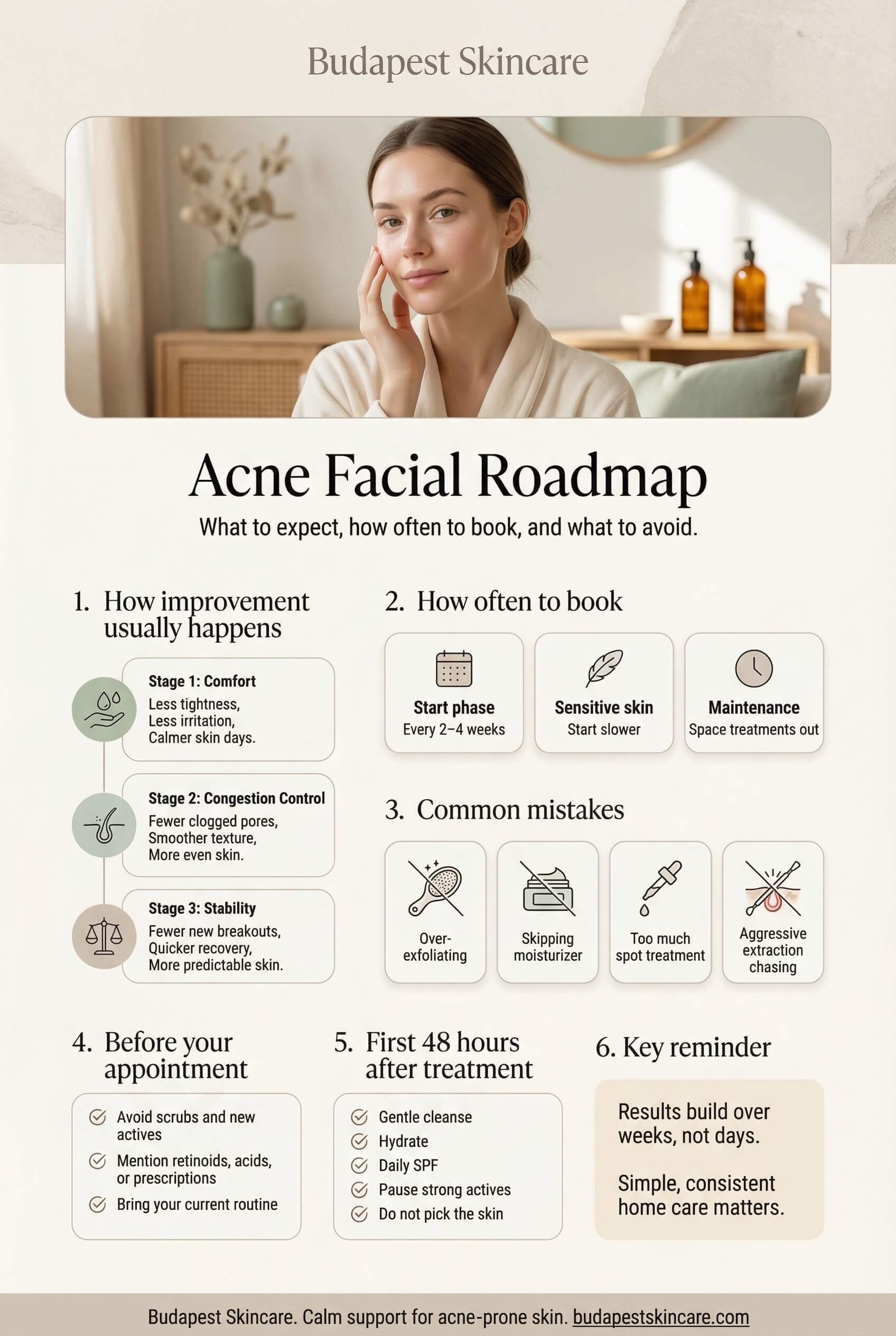
- Keep actives on hold. Pause strong acids, retinoids, and aggressive acne treatments for 24–48 hours unless your facial professional advised otherwise.
- Choose breathable hydration. A simple moisturizer is usually better than layering multiple serums right away.
- Change your pillowcase. It is a small step that reduces friction and contact with oil and styling residue.
Day 2: reintroduce acne actives slowly
- Restart one active at a time. If you use a retinoid, benzoyl peroxide, or exfoliating acid, reintroduce one product first and see how your skin feels.
- Reduce frequency, not necessarily strength. Many acne-prone clients do best by using actives fewer nights per week rather than stacking multiple strong products in one routine.
- Stay consistent with SPF. Post-facial skin can be more reactive to UV, and UV can worsen visible marks over time.
Universal aftercare rules that still apply to acne facials
These rules are “universal” because they protect the barrier and reduce irritation, regardless of skin type. Acne-prone skin benefits from them even more because irritation often triggers more oil and more breakouts.
- Less is more for 48 hours. A short routine often gives cleaner results than a complicated one.
- Avoid harsh exfoliation. No scrubs, no strong peels at home, and no extra “deep cleaning” masks.
- Do not introduce new products. Post-facial is not the time to test a new active, fragrance, or trendy mask.
- Hydration supports clarity. Dehydrated skin can feel tight and still produce excess oil, which can lead to congestion.
What is normal after an acne facial (and what is not)
It is common to have mild redness for a few hours, especially after extractions. It is also common to feel slightly dry or tight if your skin is prone to dehydration or if cleansing was intensive.
Small, surface-level bumps can appear as congestion comes to the surface. In practice, we often see this when clients go back to strong actives too quickly or wear heavy makeup too soon.
Severe swelling, increasing pain, blistering, or signs of infection are not typical for standard facial aftercare. If you are concerned, pause actives and seek medical advice from a dermatologist or healthcare professional.
Common mistakes that cause post-facial breakouts
Post-facial breakouts are often not “caused” by the facial itself. They are commonly triggered by irritation, occlusion, or over-treatment in the days that follow.
- Over-cleansing. Washing multiple times a day or using a foaming cleanser that leaves you squeaky-clean can push skin into irritation and rebound oiliness.
- Stacking actives. Combining retinoids, acids, benzoyl peroxide, and strong spot treatments right after a facial can inflame the barrier.
- Heavy occlusive products. Thick balms and rich oils can be helpful for very dry skin, but they can clog easily on acne-prone areas.
- Picking “purging” bumps. Picking increases inflammation and the chance of lingering marks.
Simple product guide for the first 48 hours
This is a practical structure you can follow without guessing. Your exact choices depend on your skin type and what was done during the facial.
Best basics
- Cleanser: gentle, low-foam, non-stripping.
- Moisturizer: lightweight, barrier-supporting, fragrance-free if you are sensitive.
- Sunscreen: comfortable daily SPF that does not feel heavy or greasy.
Usually pause for 24–48 hours
- Strong exfoliating acids (AHA/BHA) and peel pads.
- Retinoids and strong retinol blends.
- High-strength benzoyl peroxide leave-on products if you feel dryness or stinging.
- Scrubs, cleansing brushes, and abrasive tools.
Often okay if your skin feels calm
- Hydrating serums that do not sting.
- Soothing, simple masks designed for sensitive skin.
- Targeted spot care only on active breakouts, used lightly.
How often to book acne facials (and why aftercare affects the schedule)
Frequency depends on congestion level, inflammation, and how your skin tolerates extractions and exfoliation. Many acne-prone clients do well with a consistent rhythm rather than occasional intense treatments.
Aftercare affects your results because irritation can undo the calming and clearing work of the facial. A steady plan is usually part of professional acne support, which we cover in the pillar guide Acne Treatment in Budapest: Professional Facial Options for Acne-Prone Skin.
When to simplify even more
Simplify your routine if you feel burning, persistent tightness, or visible peeling. Use only cleanser, moisturizer, and sunscreen until your skin feels stable again.
Be extra cautious if you are using prescription acne treatments, have very reactive skin, or recently increased retinoids or acids. If you are under dermatology care, follow their guidance first.
FAQ: Aftercare after acne facial
What should I expect after an acne facial?
Mild redness and a slightly warm feeling are common for a few hours, especially after extractions. Some clients notice small bumps or a few new spots over the next couple of days as congestion surfaces or if the skin gets irritated. Results vary by skin type, home routine, and how inflamed the skin was before the treatment.
How should I prepare or book an acne facial if I use strong acne products?
Share your current routine when you book, including retinoids, acids, benzoyl peroxide, and any prescription products. It is often helpful to pause strong exfoliation right before a deep cleansing appointment, but the exact timing depends on your tolerance and the type of facial planned. If you are unsure, keep your routine simple for a few days and ask your facial professional for a conservative plan.
A gentle next step if you want clearer, more predictable results
If your skin tends to flare after treatments, bring this checklist to your next appointment and ask for a simple, written 48-hour plan. In a professional skincare setting, small adjustments to extraction intensity, exfoliation choice, and barrier support can make aftercare much easier.
Summary
Aftercare after an acne facial is about protecting the barrier while your pores settle. Keep the first 24–48 hours simple: gentle cleansing, light moisturizing, daily SPF, and a pause on strong actives. A calm, consistent approach usually leads to clearer-looking skin and fewer preventable post-facial flare-ups.

