

Looking for your first acne facial Budapest appointment and not sure what to expect? This guide explains what to tell your facial therapist, what usually happens during an acne-focused facial, and how to prepare so your skin stays calm and supported.
Acne facials are not “one-size-fits-all”. A good first visit is about safe deep cleansing, reducing congestion, and building a routine that fits your skin and lifestyle in Budapest.
What an “acne facial” means in practice
An acne facial is a professional, non-invasive facial tailored to acne-prone or congestion-prone skin. The goal is to clean and soften buildup in pores, calm visible redness, and support the skin barrier so your home routine works better. The focus is typically on gentle exfoliation, controlled deep cleansing, hydration, and soothing steps.
An acne facial does not diagnose or treat medical acne. It also cannot guarantee that breakouts will stop. If you have painful cystic acne, widespread inflammation, or scarring concerns, a dermatologist assessment is the safest next step alongside skincare support.
Who a first acne facial in Budapest is for
A first acne facial is a good fit if you have recurring clogged pores, blackheads, whiteheads, or frequent small breakouts. It can also help if your skin feels rough, dull, or “stuck” even with regular cleansing. Many first-time clients simply want a professional plan because home products feel confusing or inconsistent.
A first acne facial is also relevant in a city setting. Urban dust, commute exposure, and heavier daily SPF can contribute to congestion. In practice, consistent cleansing plus occasional professional deep cleansing is often what makes routines feel more effective.
What to tell your therapist at your first appointment
The fastest way to get better results from your first acne facial is to share clear, practical details. Your therapist can only tailor the facial safely if they understand what your skin has been doing in the last 2 to 4 weeks. Bring honesty, not perfection.
Share your skin story in 60 seconds
- Where you break out: jawline, cheeks, forehead, around the mouth, or back/chest.
- What the breakouts look like: blackheads, whiteheads, small bumps, inflamed pimples, or a mix.
- Timing: constant, stress-related, cycle-related, or after shaving/working out.
- Sensitivity: stinging with products, redness, peeling, tightness after cleansing.
List what is on your skin right now
- Actives you use: retinoids, acids (AHA/BHA), benzoyl peroxide, vitamin C, azelaic acid.
- Prescription products: name and how often you use them, if applicable.
- SPF and makeup: whether you wear long-wear foundation, waterproof products, or heavy sunscreen daily.
This matters because combining strong home actives with strong in-salon exfoliation can irritate the barrier. A cautious first facial is often the smartest first facial.
Tell them what you want from the visit
- “I want fewer clogged pores.” This points toward gentle exfoliation and safe deep cleansing.
- “I want less redness and sensitivity.” This points toward calming, barrier-first choices.
- “I’m getting breakouts but I’m also dry.” This points toward dehydration support, not harsh stripping.
A clear goal helps your therapist choose steps that match your skin today, not just your skin type on paper.
What happens during a first acne facial (step by step)
A first acne facial usually follows a predictable structure. The exact products and intensity should be adjusted to your skin condition, your routine, and your tolerance. A professional facial setting should feel controlled and calm, not aggressive.
1) Skin check and quick consultation
Your therapist will look at your skin in good light and ask about recent breakouts, sensitivity, and product use. This is where you mention any recent irritation, sun exposure, or “over-exfoliation” signs. A good plan often starts with doing slightly less than you expected.
2) Double cleanse (especially important if you wear SPF)
The first cleanse removes makeup, sunscreen, and surface oil. The second cleanse targets residue and helps prep the skin for the next steps. If your skin feels tight after cleansing at home, mention it.
In many parts of Budapest, tap water is relatively hard due to calcium and magnesium. Hard water can leave some people feeling tight or “squeaky clean” after washing. Gentle cleansing and barrier support can matter more than scrubbing harder.
3) Gentle exfoliation to loosen buildup
Exfoliation in an acne facial is usually about softening dead skin and clearing the path for safe extractions. Enzyme-based exfoliation is often used when the skin is easily irritated. Stronger exfoliation may be used later, once your skin’s tolerance is clearer.
4) Steam or warm softening (if suitable)
Warmth can help soften sebum and make deep cleansing more comfortable. Steam is not necessary for everyone. If you flush easily or feel sensitive, your therapist may skip heavy steam and use gentler softening methods.
5) Deep cleansing and extractions (only when appropriate)
Extractions are the part many first-timers worry about. In professional hands, extractions should be selective and controlled. The goal is to remove what is ready without damaging the skin.
A common mistake we see is expecting every pore to be “emptied” in one session. Over-extraction can leave the skin reactive and can prolong redness. A good first acne facial often prioritizes safety over intensity.
6) Calming and hydration steps
After deep cleansing, the skin usually needs soothing and hydration. This can include calming masks, lightweight hydration, and barrier-supportive finishing products. Hydration matters even for oily skin because dehydration can increase the feeling of tightness and can make the skin look more uneven.
7) SPF to finish
SPF is a standard finish after an acne facial, especially if exfoliation was involved. This step protects the skin while it settles. Daily SPF also helps reduce the look of post-blemish marks over time.
Which facial to book for a first acne facial in Budapest
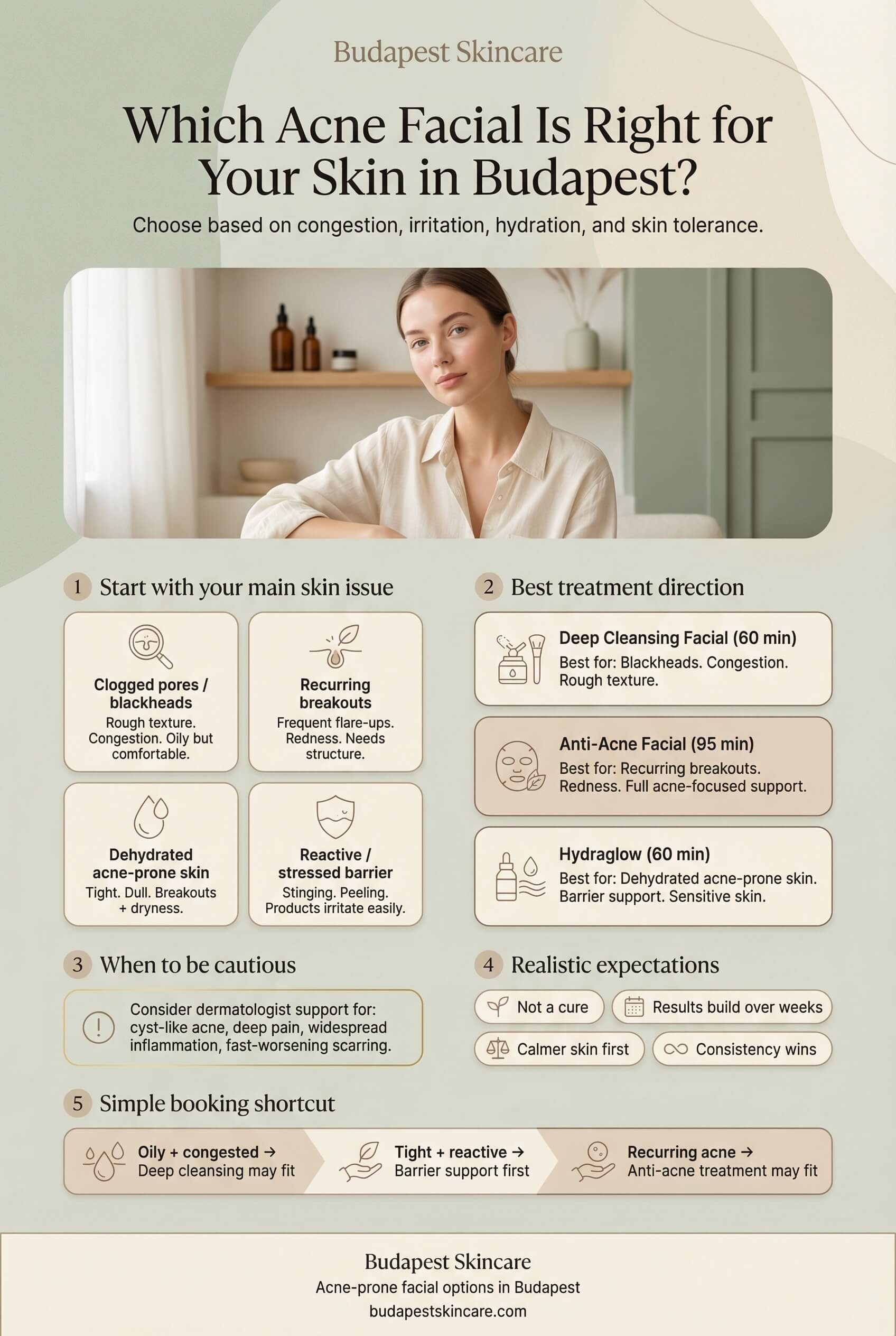
If you are choosing from a salon menu, look for an acne-focused facial that includes gentle exfoliation, deep cleansing, and calming steps. First-time acne facials should not feel like an “extreme peel day.” A balanced approach is usually more comfortable and more consistent for acne-prone skin.
At Budapest Skincare, two options often match first-time acne goals, depending on how inflamed or congested the skin looks:
- Deep Cleansing Facial Treatment (60 min): enzyme treatment, steaming, intensive deep cleansing, soothing pack, hydration.
- Anti-Acne Facial Treatment (95 min): facial cleansing, enzymatic and pore-cleansing peeling, cleansing serum and soothing mask, vitamin C serum, oil-balancing mask, barrier cream, sun protection, High Frequency device, LED therapy.
If you want broader context on professional options and how to choose a plan, see our pillar guide: Acne Treatment in Budapest: Professional Facial Options for Acne-Prone Skin. It explains the most common facial approaches and how they fit different acne-prone skin patterns.
How often to get acne facials (realistic expectations)
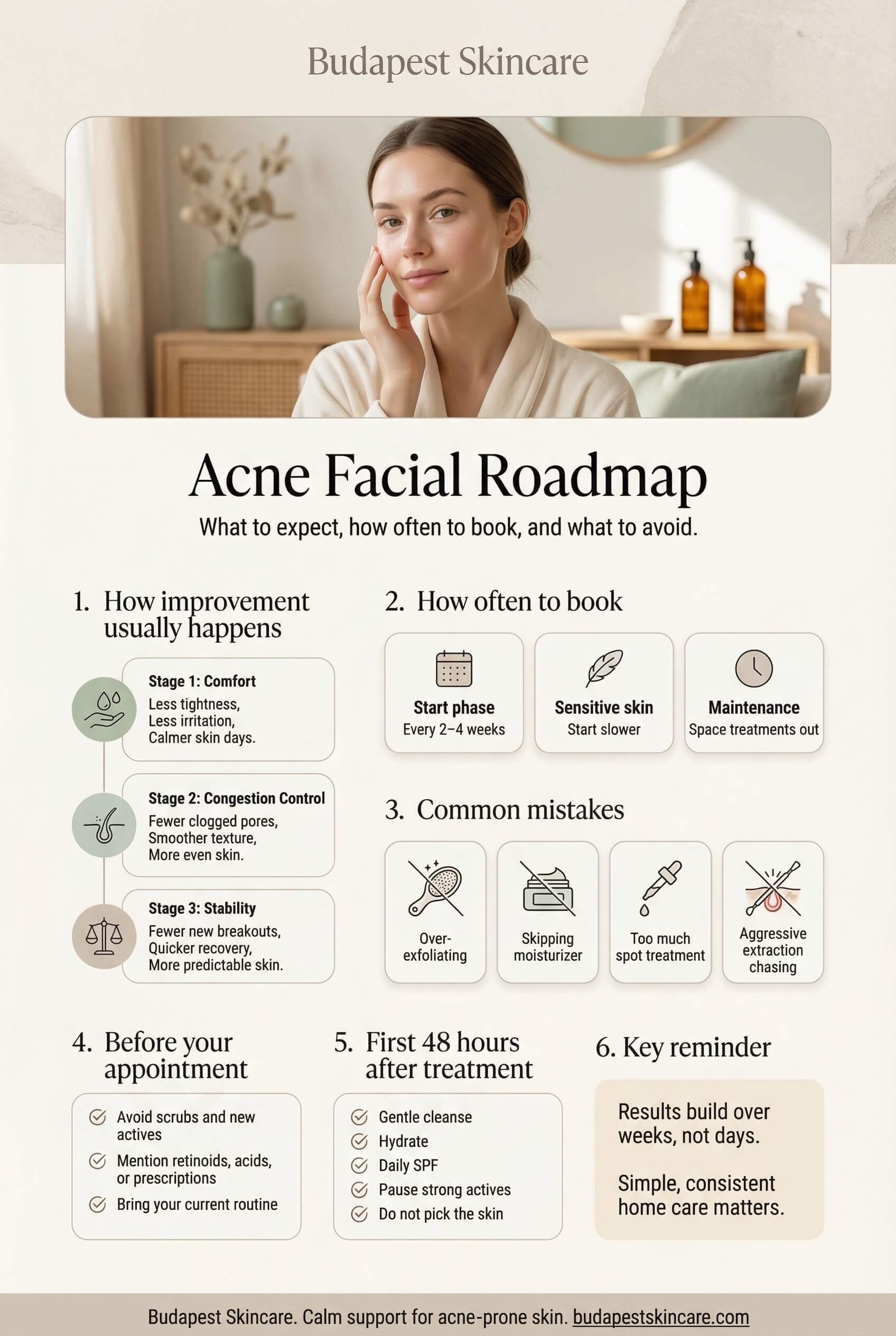
Frequency depends on how quickly you clog, how sensitive your skin is, and what you do at home. Many acne-prone clients start with a facial every 3 to 6 weeks, then adjust based on how the skin responds. A very congested skin may benefit from a short series, while a sensitive skin may do better with slower, gentler progress.
Visible improvements usually come from consistency. One facial can make the skin feel cleaner and look brighter. Longer-term changes often require a routine that supports the barrier and reduces recurring congestion.
What you might notice after your first acne facial
Most people notice smoother skin texture and a “cleaner” feel within 24 to 72 hours. Some redness is normal right after extractions, especially if the skin is reactive. Makeup usually sits better once the skin settles.
Some clients experience a short-term increase in small blemishes after deep cleansing. This is sometimes described as “purging,” but not every post-facial breakout is purging. New inflamed pimples, itching, or widespread irritation can be a sign the skin was stressed or a product did not suit you. Tell your therapist what happened so the next session can be adjusted.
How to prepare for your first acne facial (simple checklist)
Preparation is mostly about reducing irritation risk. Calm skin responds better to deep cleansing. If you are unsure what counts as “too much,” choose the cautious option.
48 to 72 hours before
- Pause strong exfoliants if you can, especially if you are sensitive. This includes AHA/BHA leave-ons and scrubs.
- Avoid picking, squeezing, or “pre-extracting” at home.
- Skip tanning and minimize heavy sun exposure.
24 hours before
- Keep your routine simple: gentle cleanse, moisturize, SPF in the morning.
- Avoid trying a new active product “to help the facial work better.”
Bring or note your products
- Write down your cleanser, moisturizer, SPF, and any acne treatments.
- Note any recent reactions, even if they seemed minor.
Aftercare for acne-prone skin (first 72 hours)
Aftercare is about protecting the skin barrier. A barrier-first approach often reduces the chance of irritation-related breakouts. Keep things boring for a couple of days.
Do
- Use a gentle cleanser and a simple moisturizer.
- Wear SPF daily, especially if exfoliation was part of the facial.
- Keep pillowcases and phone screens clean to reduce unnecessary irritation triggers.
Avoid
- Scrubs, strong acids, and new retinoid schedules unless your therapist advised otherwise.
- Picking at freshly extracted areas.
- Heavy workouts and saunas on the same day if your skin flushes easily.
Common first-timer mistakes (and what works better)
Mistake: Asking for the most aggressive option on day one. Better: Start with a controlled deep cleanse and build intensity only if your skin tolerates it.
Mistake: Using multiple acne actives at once because breakouts feel urgent. Better: Use one main active consistently and support it with hydration and barrier care.
Mistake: Expecting extractions to replace daily cleansing. Better: Treat professional deep cleansing as maintenance, not a reset button.
Mistake: Ignoring tightness after cleansing. Better: Choose gentler cleansers and moisturize properly, especially if Budapest hard water leaves your skin feeling stripped.
When to postpone and when to seek medical advice
Postpone a facial if you have a fresh sunburn, open skin, or a strong reaction to a new product. Postpone if your skin is actively peeling, stinging, or unusually inflamed. A calmer baseline makes professional care safer and more comfortable.
See a dermatologist if you have severe, painful acne, sudden widespread breakouts, or signs of infection. Professional facials can support your skin, but medical conditions need medical assessment.
FAQ: First acne facial Budapest
What should I expect at my first acne facial?
You should expect a consultation, gentle cleansing, some form of controlled exfoliation, and deep cleansing that may include selective extractions. You should also expect calming and hydration steps, plus SPF at the end. Mild redness can happen, especially after extractions, and it usually settles within a day or two depending on sensitivity.
How do I prepare and what should I tell you when booking?
When booking, share that it is your first deep cleansing facial and mention your main concern: clogged pores, inflamed breakouts, sensitivity, or post-blemish marks. Tell your therapist what acne products you use, especially retinoids, acids, or benzoyl peroxide, and whether your skin is currently irritated. For preparation, keep your routine gentle for 1 to 3 days beforehand and avoid picking or heavy exfoliation.
Will I break out after an acne facial?
Some people get a few small blemishes after deep cleansing, especially if there was a lot of congestion under the surface. That said, a significant flare-up can also mean the skin barrier was stressed or a product did not suit you. Tracking what happens in the 3 to 7 days after your facial helps your therapist tailor the next session safely.
How soon will I see results?
Many clients notice smoother texture and a cleaner feel within a few days. Longer-term improvement usually depends on consistent home care and the right facial frequency. Results vary by skin type, sensitivity, and how inflamed the breakouts are.
If you want a simple next step
If you are unsure which option to book, choose a facial that prioritizes gentle deep cleansing and calming rather than strong peeling. Bring a short list of your products and be ready to describe your skin in the last month. A clear starting point makes it easier to build a plan that fits acne-prone skin without overdoing it.
A first acne facial in Budapest should feel structured, safe, and tailored. The most helpful approach is to tell your therapist what you use at home, what your skin is doing right now, and what you want to improve. Good results usually come from controlled deep cleansing, barrier support, and consistent follow-through rather than intensity.

