

Anti acne facial what to expect usually comes down to three things: a structured deep-cleanse flow, calming steps that respect the skin barrier, and realistic aftercare. A professional anti-acne facial should feel controlled and reassuring, not aggressive or painful.
This step-by-step guide explains what typically happens in a calm, professional Anti-Acne Facial Treatment session, what you may feel during each phase, and how to prepare so you get the best possible outcome for your skin.
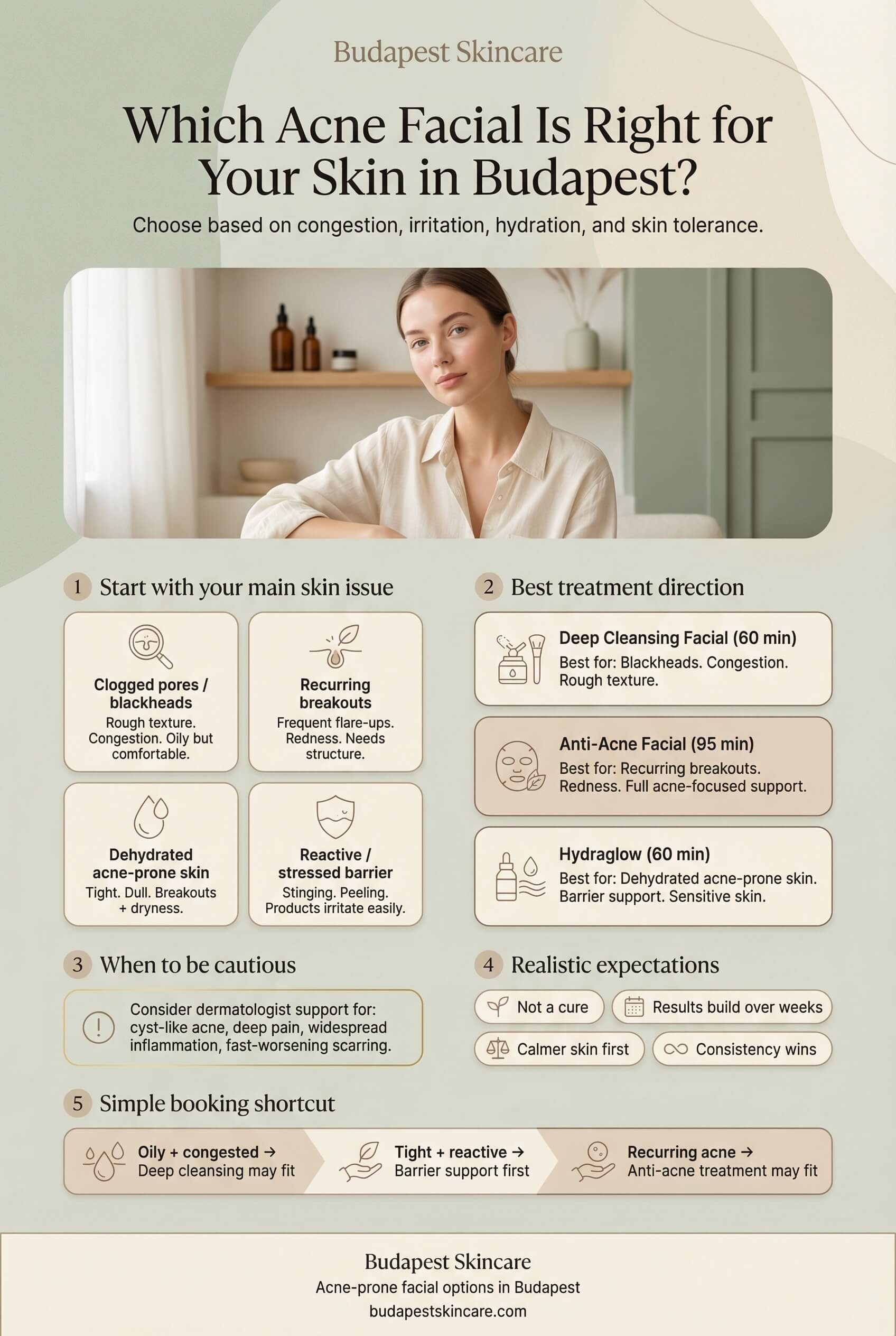
What an anti-acne facial is (and what it is not)
An anti-acne facial is a professional treatment designed to support acne-prone skin by reducing congestion, balancing oil, and calming the look of inflamed areas. The focus is usually on gentle exfoliation, pore-clearing work, soothing masks, and supportive finishing products.
An anti-acne facial is not a medical treatment for acne. It does not replace a dermatologist when acne is severe, painful, widespread, or leaving scars. A facial can support the skin’s condition and comfort, but results vary and depend on consistency, home care, and your skin’s sensitivity.
Who this treatment is for
This type of facial is often a good fit for people who get clogged pores, blackheads, frequent breakouts, or uneven texture. It can also suit clients who want a professional reset when their routine feels “stuck” and their skin looks congested.
In practice, many clients choose an anti-acne facial when they want clearer-looking skin without harsh peels or invasive procedures. A calm session is especially helpful if your skin reacts easily or feels tight and dehydrated alongside breakouts.
Who should be cautious or ask for adjustments
Some skin situations need a lighter approach. You should mention it if your skin is very irritated, peeling, sunburned, or stinging with basic skincare. A professional should be able to simplify steps and prioritize barrier comfort.
You should also flag any prescription acne products or recent procedures. If you have cystic, very painful acne, signs of infection, or sudden severe flare-ups, a dermatologist is the right first step. A salon facial can be supportive, but it should not push through medically concerning symptoms.
Anti acne facial what to expect: step-by-step session flow
A calm anti-acne facial follows a clear sequence. Each step has a purpose, and the intensity should match your current skin condition. If something feels too strong, it is appropriate to say so immediately.
1) Consultation and skin check
The session usually starts with a short consultation about your breakouts, oiliness, sensitivity, and what you are using at home. A professional will typically look at pore congestion, redness level, dehydration, and how reactive your skin seems on the day.
This is where expectations are set. A common professional approach is to prioritize safe progress over “perfectly clean pores” in one visit. That protects the skin barrier and often leads to better long-term consistency.
2) Cleansing
Cleansing removes surface oil, makeup, sunscreen, and city grime so the rest of the treatment can work evenly. In a professional setting, cleansing is usually thorough but not harsh. The goal is a clean surface without leaving the skin feeling stripped.
If you live in Budapest, you may notice your skin feels tight after washing at home. Harder tap water can contribute to that tight feeling for some people. Gentle cleansing and barrier-supporting finishing steps become even more important in that case.
3) Enzymatic and pore-cleansing peeling
Many anti-acne facials include a controlled exfoliation step to loosen dead skin and reduce the “plug” that can trap oil in the pore. In a calm professional treatment, this is typically done with an enzymatic or pore-cleansing peeling rather than aggressive scrubbing.
You may feel mild warmth or tingling. Strong burning is not the goal. If the sensation becomes sharp or uncomfortable, the product should be adjusted or removed.
4) Softening and steaming (when appropriate)
Steaming is often used to soften congestion and make extractions safer and more effective. A professional should keep steam comfortable and avoid over-heating the skin. For very sensitive or rosacea-prone skin, steam may be reduced or skipped.
Steam should feel like gentle warmth, not a hot blast. Comfort matters because stressed skin tends to flush more and can feel reactive afterward.
5) Deep cleansing and extractions
This is the step most people think of when they search “anti acne facial what to expect.” Deep cleansing can include manual extractions of blackheads and certain clogged pores. A calm professional approach is selective, not aggressive.
You may feel pressure and brief discomfort during extractions. You should not feel prolonged pain. Over-extracting can increase redness and prolong healing, so it is normal for a professional to leave some areas alone if they are not ready.
6) Cleansing serum and soothing mask
After deep cleansing, the skin is often more reactive. A cleansing serum may be used to refine the feel of pores and reduce surface oil, followed by a soothing mask to calm visible redness and support comfort.
This phase often feels like relief. Many clients notice their skin feels cooler, less tight, and more settled once the soothing step begins.
7) Vitamin C serum (as tolerated)
Some professional anti-acne protocols include vitamin C for antioxidant support and a brighter-looking finish. Vitamin C can be helpful, but it should be chosen carefully for sensitive, acne-prone skin.
If your skin is easily irritated, the professional may use a gentler formula or skip this step. A calm treatment adapts to what your skin can handle on the day.
8) Oil-balancing mask
An oil-balancing mask is often used to reduce shine and support a more matte, even look without dehydrating the skin. The goal is balance, not dryness. Over-drying can trigger more sensitivity and rebound oiliness in some people.
You may feel a light tightening as the mask sets. It should not feel painfully dry or crack on the skin.
9) Barrier cream and sun protection
Professional sessions usually end with barrier-supporting hydration to reduce tightness and help the skin recover. Sun protection is typically applied because exfoliation and deep cleansing can make skin more sun-sensitive.
This step is not optional if you are leaving the salon during daylight. Consistent SPF is one of the simplest ways to reduce post-treatment marks looking darker and to keep the skin calmer overall.
10) High Frequency device and LED therapy (professional add-ons within the session)
Some anti-acne facials include High Frequency and LED therapy as supportive finishing technologies. These are non-invasive steps that are commonly used to help calm the look of active breakouts and support a clearer-looking complexion over time.
You may feel a light buzzing or warmth depending on the device. The sensation should be mild and controlled. If you feel discomfort, the intensity should be adjusted.
What results to expect after an anti-acne facial
Right after the session, many people notice the skin looks cleaner, smoother, and less dull. Pores can look more refined because surface congestion has been reduced. Some redness is normal, especially if extractions were done.
Breakouts can behave in different ways after a deep cleanse. Some clients see a quick improvement in visible congestion. Others may experience a short “purge-like” period where pre-existing clogs come to the surface. That does not mean the facial was “bad,” but it does mean aftercare and timing matter.
Downtime: redness, marks, and what is normal
Most professional anti-acne facials have minimal downtime. Mild redness for a few hours is common. If extractions were performed, you may have small marks that settle within a day or two.
Significant swelling, intense burning, or widespread rash is not typical. If that happens, simplify your routine and seek medical advice if symptoms are severe or worsening.
How often to get an anti-acne facial
Frequency depends on how congested your skin is, how quickly you clog, and how sensitive your barrier feels. Many acne-prone clients do well with a consistent schedule rather than occasional “big” cleanses. A professional will usually suggest a rhythm that your skin can tolerate.
If you are actively breaking out, spacing sessions too close together can sometimes leave skin feeling overworked. If you are very congested, waiting too long can allow clogs to build back up. The best timing is individual.

How to prepare for an anti-acne facial (so you get a calmer result)
Arrive with a simple, honest picture of your routine. Bring a list or photos of the products you use, including prescription creams. This helps the professional avoid combinations that may be too irritating.
In the 2 to 3 days before your appointment, it often helps to avoid strong at-home exfoliation, aggressive scrubs, and new actives. If your skin is already sensitized, a calmer session usually means better recovery and a more even-looking result.
Aftercare: what to do for the next 48 hours
After an anti-acne facial, keep your routine simple. Use a gentle cleanser, a non-irritating moisturizer, and SPF during the day. This supports the barrier and reduces the chance of extra redness.
Avoid picking, harsh acids, retinoids, and heavy exfoliation for a short window unless your professional specifically advises otherwise. Many clients do best when they treat the skin like it has done “work” and needs calm recovery, not more stimulation.
Common mistakes that make post-facial breakouts more likely
Overdoing actives immediately after. Layering strong acids and retinoids right after a deep cleanse can increase irritation and redness. A calmer routine usually gives better-looking results.
Picking or squeezing. Post-extraction marks heal best when left alone. Touching and squeezing increases the chance of prolonged redness and post-breakout marks.
Skipping SPF. Sun exposure can make marks look darker and can keep inflammation looking more obvious. Daily sunscreen is a practical, protective step.
Expecting everything to clear in one visit. Acne-prone skin usually improves with consistency. A professional plan plus steady home care tends to look better than one intense session.
What a calm, professional anti-acne facial looks like in practice
A calm session has clear communication, controlled intensity, and respect for the skin barrier. The professional checks in during exfoliation and extractions. The professional also adapts if the skin flushes easily or feels sensitive that day.
In practice, the best anti-acne facials are not the ones that feel the strongest. They are the ones that leave the skin looking cleaner while still feeling comfortable and supported afterward.
How this fits into professional acne care in Budapest
If you are comparing options, it helps to view an anti-acne facial as one part of a broader plan for acne-prone skin. A good plan usually includes the right treatment frequency, barrier-aware home care, and realistic expectations around congestion cycles.
For a broader overview of choices and how to decide between them, see our pillar guide: Acne Treatment in Budapest: Professional Facial Options for Acne-Prone Skin. That page helps you understand how different professional facial approaches support acne-prone skin without overpromising.
Service note: Anti-Acne Facial Treatment (what the session includes)
At Budapest Skincare, the Anti-Acne Facial Treatment (95 min) includes: facial cleansing, enzymatic and pore-cleansing peeling, cleansing serum and soothing mask, vitamin C serum, oil-balancing mask, barrier cream, sun protection, High Frequency device, and LED therapy. The price is 22,000 HUF.
A professional may still adjust intensity within that structure based on your skin on the day. That is a normal part of keeping the treatment calm and skin-safe.
FAQ
Anti acne facial what to expect: will it hurt?
Most of the facial should feel comfortable. Extractions can feel like pressure and brief discomfort, but they should not feel intensely painful or endless. A calm professional approach is selective and avoids forcing pores that are not ready.
How should I prepare before booking an anti-acne facial?
Share what you use at home, including prescription products, and mention any recent peels or strong active use. Avoid heavy exfoliation and new actives for a few days before your appointment if your skin is easily irritated. If you have a big event, consider booking with enough buffer time in case you have temporary redness or small extraction marks.
Gentle next-step note
If you are unsure whether your skin needs deep cleansing, calming, or a lighter approach, a short consultation and skin check can clarify what to prioritize. The goal is a plan that improves how your skin looks and feels without pushing it past its comfort zone.
An anti-acne facial is a structured, non-invasive way to support acne-prone skin through cleansing, controlled exfoliation, careful deep cleansing, and calming finish steps. A professional, calm session focuses on balance and barrier comfort, with realistic expectations and simple aftercare that protects the results.

