

Acne treatment Budapest searches often mean two things: you want calmer, clearer skin, and you want to choose a professional facial that is safe for acne-prone skin. This guide explains realistic expectations, which facial options are usually worth considering, and how to plan treatments in Budapest without overdoing your skin.
What “acne treatment” means in a salon setting
In a professional skincare salon, acne treatment usually means non-invasive care that supports clearer-looking skin. The goal is to reduce congestion, calm the look of redness, and improve how the skin behaves over time. A salon facial cannot replace medical acne care when acne is severe, painful, or persistent.
In practice, salon treatments work best when they focus on three things: gentle but thorough cleansing, controlled exfoliation, and barrier support. Acne-prone skin often reacts badly to aggressive scrubs, harsh acids used too frequently, and over-cleansing. Professional treatment should feel structured, not intense.
If you have cyst-like lesions, deep pain, widespread inflammation, or scarring that is rapidly worsening, a dermatologist assessment is the safest next step. A salon facial can still be supportive alongside medical guidance. It should not be positioned as a cure.
Who professional acne facials are for (and who should be cautious)
Good candidates for salon-based acne support
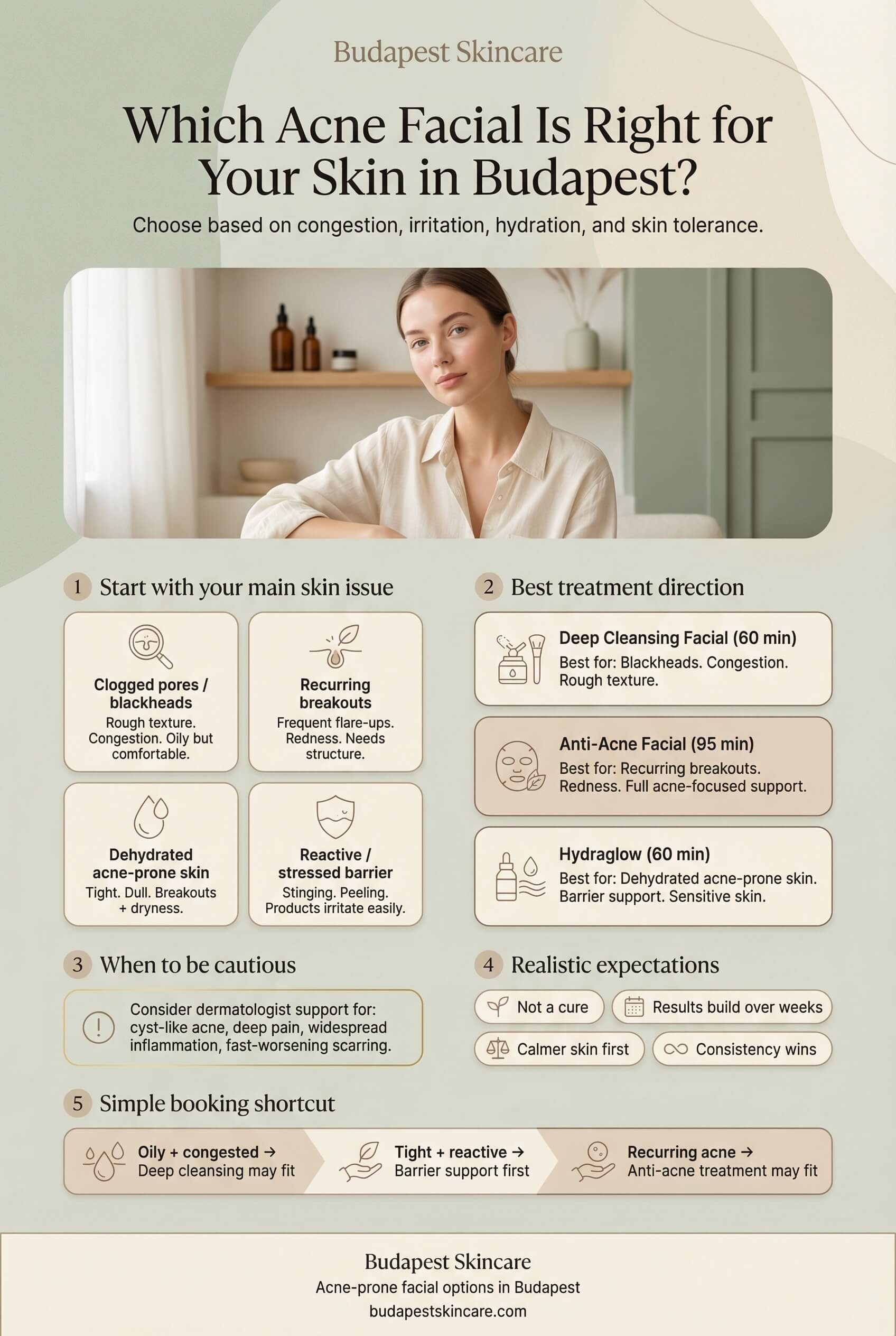
Professional acne facials are usually a good fit for mild to moderate breakouts, clogged pores, blackheads, and uneven texture. They can also help if your skin feels “stuck” in a cycle of congestion and irritation from trying too many products. Many clients also come in for post-breakout dullness and dehydration, which often makes acne-prone skin look worse.
When to pause and simplify
It is smart to be cautious if your skin is very inflamed, stinging, peeling, or reacting to most products. Those signs often suggest a stressed barrier. In that case, less exfoliation and more calming steps usually lead to better outcomes.
When professional facials are not enough on their own
Hormonal-pattern acne, persistent jawline breakouts, or acne that returns quickly can need a medical plan. A facial can improve comfort and congestion, but it may not change the underlying trigger. It is reasonable to combine a dermatologist plan with gentle professional treatments.

Why acne can feel worse in Budapest (local, practical factors)
Budapest’s city-center lifestyle can contribute to daily buildup on the skin. Dust, pollution, and commuting can increase the feeling of congestion, especially if cleansing is rushed at night. Consistent, gentle cleansing becomes more important than “stronger” products.
Many people in Budapest also notice tightness after washing, which can be influenced by harder tap water in some areas. Hard water can leave the skin feeling stripped even when you use a decent cleanser. A simple adjustment is to switch to a gentler cleanser and follow quickly with hydration and barrier-support steps.
Seasonality matters in Budapest’s continental climate. Hot summers can mean more sweat, heavier SPF use, and more clogged pores. Cold, windy winters can increase dryness and sensitivity, which can make acne routines backfire if they stay too harsh.
How to choose an acne treatment in Budapest: what matters most
The best acne treatment choice is usually the one your skin can tolerate consistently. Tolerance is not the same as “how strong it feels.” A good professional plan balances deep cleaning with calming and hydration.
Three selection criteria help most clients make a good decision. First, choose a treatment that addresses your main issue: congestion, inflammation, or barrier stress. Second, avoid stacking too many intense steps in one session if you are reactive. Third, plan frequency realistically, because acne-prone skin responds better to steady routines than occasional aggressive resets.
Professional facial options for acne-prone skin (what they do and what to expect)
There is no single “best facial for acne.” A good option depends on whether your acne-prone skin is mainly clogged, inflamed, or sensitized. In a professional skincare setting, treatment selection should be based on what your skin shows that day, not only on what it did last month.
Option 1: Anti-Acne Facial Treatment (75 min)
This is a structured choice when breakouts and congestion are a recurring issue and you want a full protocol in one visit. The Anti-Acne Facial Treatment (95 min) includes facial cleansing, enzymatic and pore-cleansing peeling, cleansing serum and soothing mask, vitamin C serum, oil-balancing mask, barrier cream, sun protection, High Frequency device, and LED therapy.
Many clients notice their skin looks less “puffy” and more even within a few days. Some also notice purging-like changes if clogged pores were very compacted, but that is not guaranteed and should not be forced. The aim is calmer, clearer-looking skin with fewer new clogs over time.
Option 2: Deep Cleansing Facial Treatment (60 min)
This option is usually best when the main issue is clogged pores, blackheads, and a rough, uneven surface. The Deep Cleansing Facial Treatment (60 min) includes enzyme treatment, steaming, intensive deep cleansing, soothing pack, and hydration.
Deep cleansing can be very helpful, but it should not be treated as a monthly “scrape.” Over-extraction can irritate acne-prone skin and lead to more redness and rebound oiliness. A good deep cleanse is precise and followed by soothing and hydration.
Option 3: Hydraglow Treatment (60 min) for dehydrated, stressed acne-prone skin
Acne-prone skin can still be dehydrated. Dehydration often shows up as tightness, dullness, and makeup that looks patchy, even when the skin produces oil. In those cases, a hydration-forward session can make your routine work better and reduce the urge to over-exfoliate.
The Hydraglow Treatment (60 min) includes Hydraglow + ultrasound, oxygen therapy, and LED therapy. This option can suit clients who break out but cannot tolerate aggressive exfoliation. It tends to support comfort and glow rather than “deep extraction.”

Realistic expectations: timeline, frequency, and what results look like
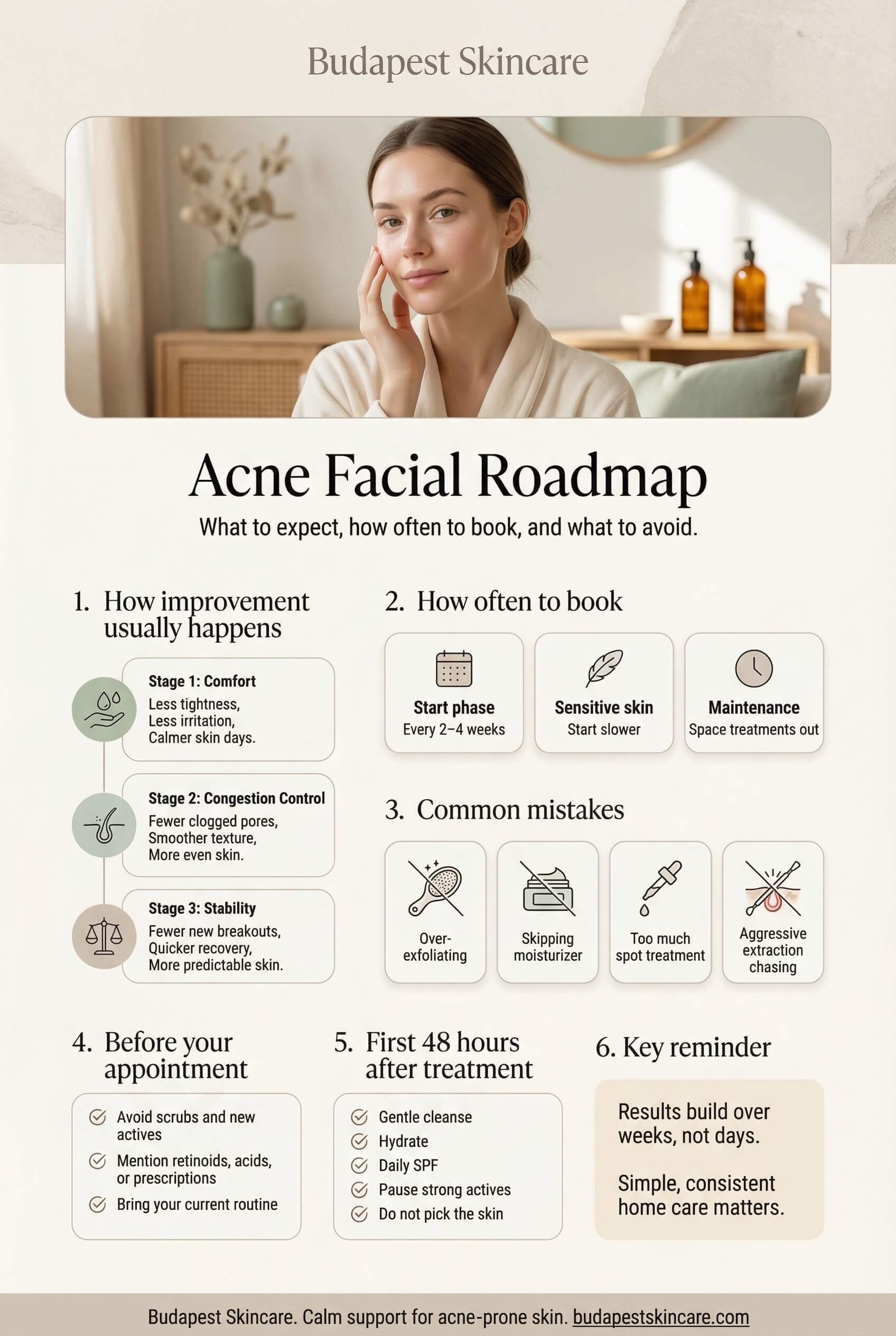
Acne-prone skin usually improves in stages. The first stage is comfort: less tightness, less surface irritation, and fewer “angry” days. The second stage is congestion control: fewer clogged pores and a smoother texture. The third stage is stability: fewer new breakouts and quicker recovery when breakouts happen.
A realistic timeline is measured in weeks, not days. Many clients notice a fresher look quickly, but sustained change depends on consistent home care and appropriate treatment spacing. Results vary by skin type, lifestyle, and whether there are hormonal or medical drivers.
How often to book an acne facial
For active congestion, a common starting rhythm is every 2 to 4 weeks for a short series, then spacing out as the skin stabilizes. For sensitive acne-prone skin, starting slower can be smarter. Your skin should look calmer after treatments, not progressively more irritated.
How long results last
Facial results last longer when you keep your home routine simple and consistent. If your routine is constantly changing, the skin can stay reactive and unpredictable. Consistency usually beats intensity.
Common mistakes we see with acne-prone skin (and what to do instead)
Over-exfoliating to “dry out” breakouts
A common mistake is using acids, scrubs, and cleansing devices too frequently. Over-exfoliation can increase sensitivity and trigger more oiliness as the skin tries to compensate. A better approach is controlled exfoliation with enough recovery days.
Skipping moisturizer because the skin is oily
Oily skin can still be dehydrated. Skipping moisturizer can increase tightness and make the skin feel more reactive. A lightweight, non-greasy moisturizer often helps acne routines feel more stable.
Spot-treating everything, all the time
Constant spot treatment can create patchy irritation and uneven texture. It often leads to a cycle of redness and flaking that looks worse than the breakout itself. Use spot treatments selectively and keep the rest of the face calm.
Chasing “instant” extraction results
Extraction can be helpful, but it is not the only lever. Too much extraction can inflame the skin and increase post-treatment redness. A professional plan should include calming and barrier support, not only clearing.
How to prepare for an acne facial appointment
Arrive with clean skin if possible, but do not over-cleanse or scrub right before. Avoid starting new actives in the 3 to 7 days before your appointment if your skin is reactive. If you use retinoids, strong acids, or prescription acne products, it is safer to mention them during booking so the treatment can be adjusted.
Come with your routine notes. A short list of your cleanser, moisturizer, SPF, and active products helps a lot. In practice, the fastest improvements often come from removing one or two irritating steps rather than adding more products.
Aftercare basics: the first 48 hours
Keep your routine simple after an acne facial. Focus on gentle cleansing, hydration, and daily SPF. Avoid strong exfoliation, retinoids, and “peel” products for a short window unless a professional specifically advised otherwise.
Expect some temporary redness after deep cleansing, especially if extractions were needed. Avoid picking or pressing the skin, even if a small bump comes to the surface. If you are unsure what is normal for your skin, it is reasonable to check in before you restart active products.
How this fits into a bigger skincare plan (your pillar topic)
Acne facials work best as part of a broader acne-prone skincare strategy. That broader strategy includes daily cleansing that does not strip, hydration that supports the skin’s protective function, and targeted actives used at a tolerable frequency. If you are building that full plan, connect this article to your main guide on acne-prone skincare routines and long-term skin health, because treatment choice and home care need to match.
FAQs
What should I expect during an acne treatment facial in Budapest?
You should expect a skin check, gentle cleansing, controlled exfoliation, and calming steps. If deep cleansing is included, extractions may be done selectively, not aggressively. Many people leave with temporary redness but a cleaner, fresher feel, and the skin often looks more settled after a few days.
How do I prepare for booking an acne treatment appointment?
Prepare by noting your current products and any prescription treatments, because they affect what is safe to do. Avoid heavy exfoliation, scrubs, and new actives for several days before if your skin is sensitive. If you are unsure which option fits, book based on your main concern, like congestion or irritation, and let the professional adjust on the day.
Can a salon facial get rid of acne permanently?
No professional facial can promise permanent results. Acne-prone skin is influenced by multiple factors, including hormones, stress, and routine consistency. A good facial plan can support clearer-looking skin and better control, but outcomes vary.
Is deep cleansing always the best choice for acne?
Deep cleansing helps most when congestion and blackheads are the main issue. It is not always the best choice when the skin is inflamed, sensitized, or dehydrated. In those cases, calming and hydration-focused treatments can be a smarter first step.
Optional next step if you are choosing between treatments
If you are deciding between deep cleansing and a more calming anti-acne approach, base the choice on how your skin feels right now. Tight, stinging, or flaky skin usually needs barrier support first. Oily but comfortable skin with obvious blackheads often tolerates deep cleansing better.
Acne treatment in Budapest is most effective when it is realistic, consistent, and matched to what your skin can tolerate. Professional facials can support clearer-looking skin by reducing congestion, calming visible irritation, and improving hydration and routine stability. The best results usually come from a steady plan, not from pushing the skin too hard.

