

How often acne treatment make sense depends on your skin’s current “phase”: the first reset phase is usually more frequent, while maintenance is typically less often. A good schedule balances deep-cleansing support with barrier care, so skin can calm down rather than feel constantly irritated.
This guide gives a realistic cadence you can use when planning professional acne facials, including what changes the timeline and when to slow down. It also links back to our broader pillar guide, Acne Treatment in Budapest: Professional Facial Options for Acne-Prone Skin, for treatment types and decision-making.
Quick answer: a realistic acne facial cadence
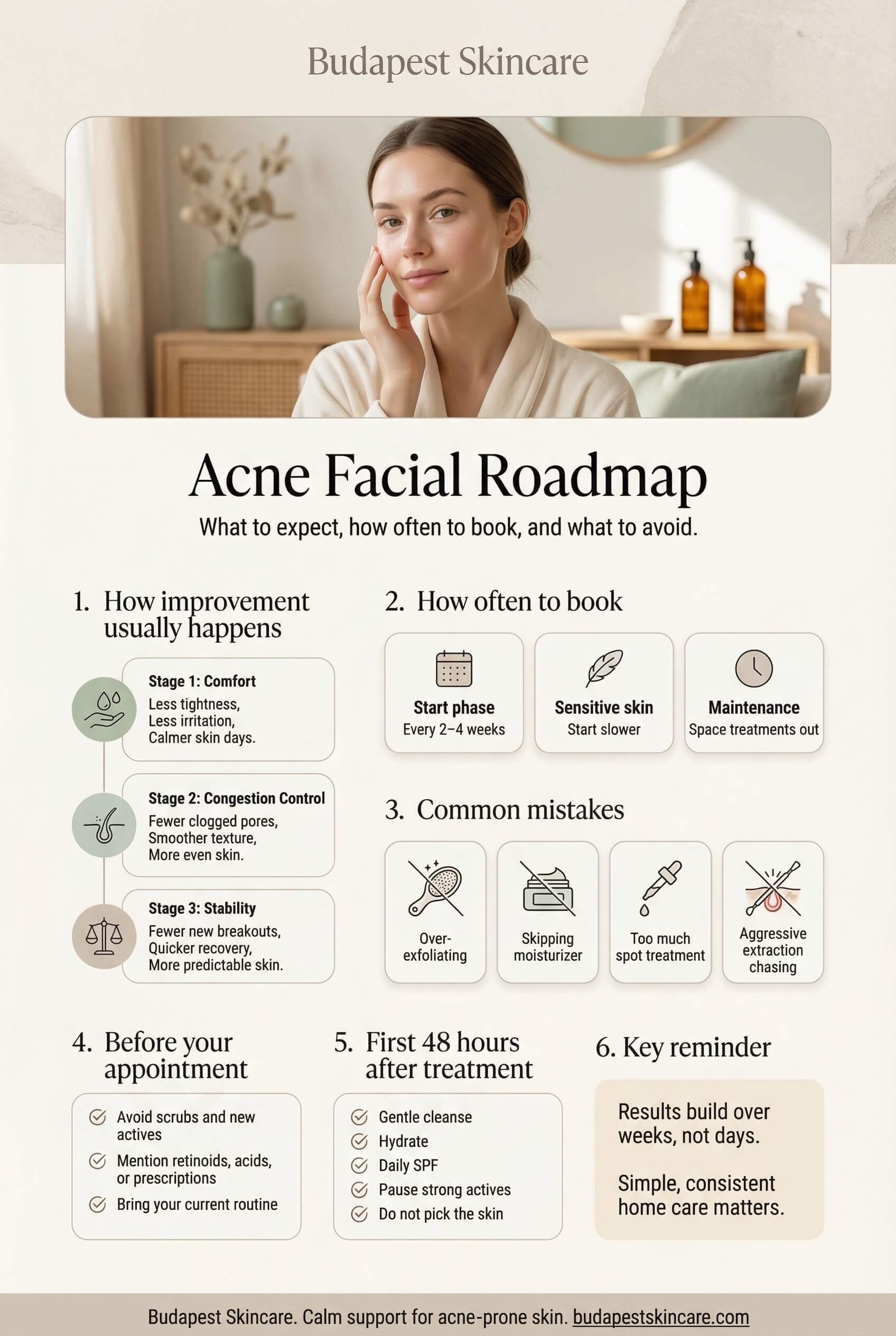
Most acne-prone clients do best with a short “start phase” of more frequent treatments, followed by a maintenance phase. In practice, a common cadence is every 2 to 4 weeks at the start, then every 4 to 8 weeks for maintenance.
Acne facials are not a one-off fix. They are usually most helpful when paired with a simple, consistent home routine and when the treatment intensity matches your skin’s sensitivity and inflammation level.
What “acne facial frequency” really means
Acne facial frequency is the planned spacing between professional treatments that focus on congestion, excess oil, and post-breakout recovery. The goal is to support clearer pores and a calmer skin surface without over-stripping the skin.
Spacing matters because skin needs time to recover. If treatments are too frequent or too aggressive, many people notice more dryness, stinging, or rebound oiliness, which can make breakouts feel harder to manage.
Start phase vs maintenance: the schedule that usually works best
Start phase (reset): every 2 to 4 weeks
The start phase is for active congestion and frequent breakouts. Many clients book every 2 to 3 weeks for the first 2 to 4 sessions, then reassess. A 4-week interval can also work well if skin is sensitive or easily dehydrated.
The purpose of the start phase is consistency, not intensity. A professional facial can support pore clarity and reduce the “build-up cycle,” but only if the skin barrier stays stable between visits.
Maintenance phase: every 4 to 8 weeks
Maintenance is for skin that is mostly stable but still prone to occasional breakouts or blackheads. Many people do well with a monthly facial. Others prefer every 6 to 8 weeks if their home routine is working and sensitivity is low.
Maintenance is also a good time to shift the focus. Treatments often move from intensive clearing toward hydration, calming support, and gentle resurfacing so pores stay clearer with less irritation risk.
When “more often” is not better
More frequent acne facials are not automatically better for acne. If your skin feels tight after cleansing, stings with basic products, or flakes easily, the barrier may need a calmer plan and longer spacing.
Inflamed breakouts also require caution. A gentler approach and fewer extractions can be more helpful than repeated aggressive sessions that leave skin sore or sensitized.
How to choose the right frequency for your skin
Your ideal schedule depends on oil flow, congestion speed, sensitivity, and your routine. Two people can have “acne-prone skin” and need very different spacing. A professional assessment helps match treatment strength and timing to what your skin can tolerate.
1) How quickly you clog
Fast-clogging skin often benefits from a shorter start phase interval. If you see blackheads and texture return quickly after a good cleanse, every 2 to 3 weeks can be reasonable at the beginning.
Slow-clogging skin can usually wait longer. If congestion builds over a month or two, a monthly or 6-week schedule may be enough.
2) Your barrier and sensitivity level
Sensitive, dehydrated, or easily irritated skin usually needs more time between sessions. In practice, these clients do better with gentler treatments and 3 to 5 weeks spacing at the start.
Over-treatment can look like “more acne.” It can also show up as redness, burning with simple moisturizers, or new rough patches that were not there before.
3) Your home routine consistency
A consistent routine can lengthen the time you need between acne facials. If cleansing, moisturizing, and daily SPF are steady, maintenance can often move to every 6 to 8 weeks.
An inconsistent routine often shortens your window. If products change weekly or actives are used randomly, skin can swing between clogged and irritated, which makes scheduling harder.

4) Season and lifestyle factors (Budapest reality)
Season can change how often acne facials feel helpful. Hot, humid summers can increase sweat, SPF layering, and congestion, so some people prefer slightly closer spacing. Cold, windy winters often increase dryness and barrier stress, so many people benefit from gentler sessions and longer intervals.
Urban exposure can add to build-up. City-center dust and pollution can contribute to dullness and congestion, which makes consistent cleansing and occasional deep cleansing more relevant for some clients.
What to expect from an acne facial schedule (realistic outcomes)
Most people notice the “feel” change before they see perfect clarity. Skin can feel smoother, less congested, and easier to manage after a few consistent sessions. Visible breakouts can still happen, especially around stress, hormones, or routine changes.
Results vary and take repetition. A common pattern is gradual improvement over 6 to 12 weeks with a steady schedule, rather than a dramatic change after one appointment.
Signs your current frequency is working
- Fewer new clogged pores between visits.
- Less “pressure” or bumpiness under the skin.
- Faster recovery after a breakout, with less lingering roughness.
- More stable comfort, meaning less stinging and tightness day to day.
Signs you may need to reduce frequency or intensity
- Persistent redness that does not settle within a day or two.
- Stinging with bland products like gentle moisturizer.
- More flaking and tightness, especially after cleansing.
- Breakouts that look “angrier” right after repeated treatments.
Common mistakes we see with acne facial frequency
Booking too close together after a “purge-like” flare
Not every flare needs another immediate deep cleanse. Sometimes the skin is simply irritated and needs calming support, fewer actives, and time. A professional can adjust the plan so you do not chase inflammation with more stimulation.
Trying to extract everything every time
More extractions are not always better. Over-extraction can leave skin sore and reactive, and it can increase the risk of marks. A good acne facial plan prioritizes safe, selective clearing and barrier-friendly aftercare.
Overusing strong actives between appointments
Stacking multiple exfoliants can backfire. If you use strong acids, scrubs, and retinoids without structure, the barrier can weaken and breakouts can feel more unpredictable. A simple routine often supports better results from professional treatments.
Ignoring hydration because skin is oily
Oily skin can still be dehydrated. Dehydration can make skin feel tight and can trigger more visible oiliness. Balanced hydration often makes acne care more tolerable and consistent.
How long to keep the start phase before switching to maintenance
A practical start phase is often 2 to 4 treatments. That usually gives enough time to see whether congestion is reducing and whether the skin stays comfortable between sessions.
Switch to maintenance when breakouts are less frequent and recovery is quicker. If your skin is calmer but still clogs slowly, stretching to every 4 to 6 weeks is a common next step.
Which professional facial types fit acne-prone skin (and how that affects frequency)
Acne-prone skin usually benefits from treatments that balance clearing with calming. Frequency should match the treatment’s intensity and your sensitivity. A deeper session often needs more recovery time than a gentle cleansing and hydration-focused facial.
For a broader overview of options and how they compare, see our pillar guide: Acne Treatment in Budapest: Professional Facial Options for Acne-Prone Skin.
When deep cleansing is the priority
Deep cleansing can be useful when clogged pores are a main issue. In our setting, the Deep Cleansing Facial Treatment (60 min) includes enzyme treatment, steaming, intensive deep cleansing, soothing pack, and hydration. Many clients schedule this every 3 to 6 weeks depending on sensitivity and how fast congestion returns.
When acne is inflamed or easily irritated
Inflamed, reactive skin often needs a more calming, structured approach. In our menu, the Anti-Acne Facial Treatment (95 min) includes enzymatic and pore-cleansing peeling, soothing mask steps, oil-balancing support, barrier cream, sun protection, and supportive devices. A common cadence is every 2 to 4 weeks at the start, then monthly, depending on how the skin responds.
Aftercare basics that protect your results between acne facials
The first 48 hours after a facial can influence how calm your skin stays. Keep your routine simple and avoid adding new strong products right away. If your skin feels warm or reactive, prioritize soothing hydration and barrier support.
For the first 24 to 48 hours
- Skip harsh exfoliation and avoid scrubs.
- Avoid picking even if a spot looks tempting.
- Use gentle cleansing and a straightforward moisturizer.
- Wear SPF daily, especially if any exfoliation was done.
If your skin feels tight after cleansing
Check your cleanser and water temperature. In many parts of Budapest, tap water can be harder, which can leave some people feeling tight after washing. A gentle cleanser, lukewarm water, and immediate moisturizing often helps the skin feel more comfortable.
When to pause and get medical input
Professional facials can support acne-prone skin, but they are not medical treatment. If you have painful cyst-like breakouts, widespread inflammation, scarring concerns, or acne that is not improving, a dermatologist is the right next step.
Stop or simplify if your skin is reacting strongly. Persistent burning, swelling, or worsening rash-like irritation needs professional medical advice rather than repeated treatments.
FAQs: how often acne facial, what to expect, and how to prepare
FAQ: How often should you get an acne facial at the beginning?
Many people start with an acne facial every 2 to 4 weeks for the first 2 to 4 sessions. The best interval depends on how quickly you clog and how sensitive your skin is. A calmer approach with slightly longer spacing is often better for reactive skin.
FAQ: How often should you get an acne facial for maintenance?
Maintenance is commonly every 4 to 8 weeks. Monthly works well for many clients who still get occasional breakouts. Every 6 to 8 weeks can be enough if your routine is stable and your skin stays comfortable.
FAQ: What should I expect during an acne facial?
Expect a focus on cleansing, gentle exfoliation, and targeted clearing of congestion when appropriate. Many sessions include steaming, careful extractions if suitable, and calming hydration to reduce post-treatment tightness. Mild redness can happen, especially after extractions, and it usually settles within a day or two.
FAQ: How should I prepare for an acne facial and when should I book?
Arrive with minimal or no makeup if possible, and bring a list of your current products. Avoid strong exfoliants and new active products for a few days beforehand unless you have been instructed otherwise by a professional. If you have a big event, booking at least 5 to 7 days before is a safer buffer in case of temporary redness.
A gentle next step if you want a clear plan
If you are unsure how often to book, start by choosing a realistic start phase interval you can maintain. A consistent every-3-weeks plan often beats an aggressive weekly plan that leads to irritation. If you want help choosing the right treatment type for acne-prone skin in Budapest, our pillar guide, Acne Treatment in Budapest: Professional Facial Options for Acne-Prone Skin, can help you compare options and decide what fits your skin and schedule.
Summary: The best answer to how often acne facial depends on your phase. Start with every 2 to 4 weeks for a short reset period, then move to every 4 to 8 weeks for maintenance. The right cadence supports clearer pores while protecting the skin barrier, and it should be adjusted if your skin becomes tight, stingy, or persistently red.

