

Acne facial sensitive skin is a tricky combination because you want clearer pores without pushing your skin into redness, stinging, or flaking. The safest approach is a barrier-first acne facial that uses gentle exfoliation, careful extractions only when appropriate, and calming, hydrating steps.
Sensitive, acne-prone skin often reacts more to heat, friction, strong acids, and aggressive extraction. A good facial plan respects clear safety boundaries and prioritizes steady improvement over “one intense session.”
What “acne facial sensitive skin” really means
An acne facial for sensitive skin is a professional facial designed to support congested or breakout-prone skin while minimizing irritation triggers. The goal is to reduce the look of congestion, support a calmer skin feel, and protect the skin’s barrier so it can tolerate consistent care.
Sensitive skin is not a diagnosis. Sensitive skin is a pattern of easy reactivity, such as burning with products, redness after washing, or tightness and flaking after actives. Acne-prone skin can still be sensitive, especially if you have been using multiple strong products at once.
In practice, many clients with acne and sensitivity are not “too oily.” They are often dealing with a stressed barrier plus clogged pores. That combination usually needs gentleness, not intensity.
Who this type of facial is for
This article is for you if you get breakouts and also experience stinging, redness, tightness, or frequent dryness. It is also for you if your skin flares after exfoliation, hot steam, or strong acne products.
This is also relevant if you are using acne actives at home and feel unsure how to combine them with facials safely. The safest results usually come from aligning your home routine with your in-salon plan.
Core safety boundaries for acne facials on sensitive skin
Sensitive, acne-prone skin does best with clear boundaries. These boundaries reduce the risk of irritation, prolonged redness, and “angry” breakouts that are actually inflammation from over-treatment.
Boundary 1: Protect the barrier before chasing clear pores
The skin barrier is the outer protective layer that helps keep moisture in and irritants out. When it is compromised, acne products can sting and even gentle touch can feel uncomfortable. A barrier-first facial focuses on soothing, hydration, and controlled exfoliation rather than aggressive stripping.
Boundary 2: Lower heat and friction
Heat and friction can amplify redness and sensitivity. Hot steam, hot towels, and vigorous massage can make reactive skin feel worse. A safer acne facial uses minimal heat, light touch, and calm pacing.
Boundary 3: Keep exfoliation controlled and purposeful
Exfoliation should match your tolerance, not your frustration. Sensitive skin often does better with shorter contact time, lower strength, and fewer layers. More exfoliation in one session does not automatically mean better results.
Boundary 4: Extractions are optional, not mandatory
Extractions can be helpful, but they are not always the safest step for sensitive skin. Inflamed pimples and painful bumps should not be forced. A good facial professional will choose selective extractions only when the skin is ready and the congestion is appropriate to remove.
Safer acne facial options for sensitive skin (what tends to work well)
A safer approach uses steps that soften congestion, support hydration, and calm visible redness. The exact products and devices should be chosen based on your skin’s current reactivity level.
1) Gentle cleansing and low-foam, low-fragrance formulas
Gentle cleansing is the base of a safe acne facial for sensitive skin. Harsh cleansers can leave the skin tight and reactive, which often leads to more irritation from every step that follows. In many parts of Budapest, tap water can be harder, and some people notice more tightness after rinsing, so cleanser choice and barrier support matter.
2) Enzyme-based exfoliation instead of strong acids (often)
Enzymes can help loosen dead skin and surface buildup with less sting than stronger acid peels. Enzymes are not “weak.” They are simply a different pathway that many sensitive clients tolerate better. The safest choice depends on your sensitivity, current breakouts, and what you use at home.
3) Short-contact, low-irritation exfoliation when acids are used
Some sensitive, acne-prone skins can tolerate carefully chosen acids in conservative formats. Short contact time, lower concentration, and fewer layers are common safety choices. Your skin should feel calm during the step, not burning.
4) Calming masks and barrier-supporting hydration
A calming mask is not just a “nice extra.” It is a safety step that helps the skin settle after cleansing and exfoliation. Hydration and barrier support can reduce the tight, shiny-yet-dehydrated feel that many acne-prone clients experience.
5) LED therapy as a calming, non-contact add-on
LED is often used in professional skincare settings because it is non-invasive and does not rely on friction or heat. It can be a good option for clients who flare easily. The right choice and timing depend on your skin’s sensitivity and current inflammation level.
6) Conservative, selective extractions when the skin is ready
When extractions are appropriate, “less but better” is usually safer for sensitive skin. The skin should be properly softened first, and the professional should avoid squeezing inflamed lesions. After extractions, soothing and barrier support are essential.
What to avoid in an acne facial if you have sensitive skin
Many problems come from stacking too many intense steps in one session. Sensitive skin does best when the facial stays within tolerance and leaves the skin calm at the end.
Avoid: overly hot steam and prolonged heat
Excessive heat can worsen redness and trigger flushing. It can also make skin feel more reactive after the facial. If you know you flush easily, ask for minimal steam or alternative softening methods.
Avoid: aggressive extractions on inflamed acne
Forcing extractions on inflamed pimples can increase irritation and prolong marks. It can also raise the risk of post-treatment sensitivity. A safer facial focuses on calming inflammation first and choosing extractions only for suitable congestion.
Avoid: combining multiple strong exfoliants in one appointment
Stacking strong acids, scrubs, and intense devices can overwhelm sensitive skin. Over-exfoliation often shows up as stinging with water, increased redness, and sudden dryness. A controlled plan is safer than a “maximum strength” session.
Avoid: harsh scrubs and heavy friction
Physical scrubs can create micro-irritation, especially when your barrier is already stressed. Friction can also spread irritation across areas that were previously calm. Sensitive acne-prone skin usually does better with gentle, even contact.
Avoid: strong fragrance and essential oils if you react easily
Fragrance and essential oils are common triggers for reactive skin. Not everyone reacts, but if you are sensitive, it is a reasonable safety choice to keep formulas simple. Calm skin is easier to clear consistently.
Avoid: “purging promises” as a justification for irritation
Some acne treatments can cause a temporary increase in visible breakouts, but irritation is different. Burning, swelling, persistent redness, and peeling are signs the skin is overwhelmed. A safe acne facial should not leave you feeling raw.
What a barrier-friendly acne facial often looks like (step-by-step)
A safe facial for acne and sensitivity is usually structured to keep the skin calm at every stage. The steps can vary by salon, but the logic stays consistent.
- Gentle cleanse: removes surface oil and sunscreen without stripping.
- Softening step: mild steam or alternative softening to prepare the skin.
- Controlled exfoliation: enzyme or conservative acid choice, short and monitored.
- Selective extractions (optional): only where appropriate, no forcing inflamed areas.
- Calming mask: reduces visible redness and supports comfort.
- Hydration and barrier support: helps the skin feel balanced after treatment.
- SPF finishing step: essential if exfoliation was used and you will be outdoors.
How often to get an acne facial when your skin is sensitive
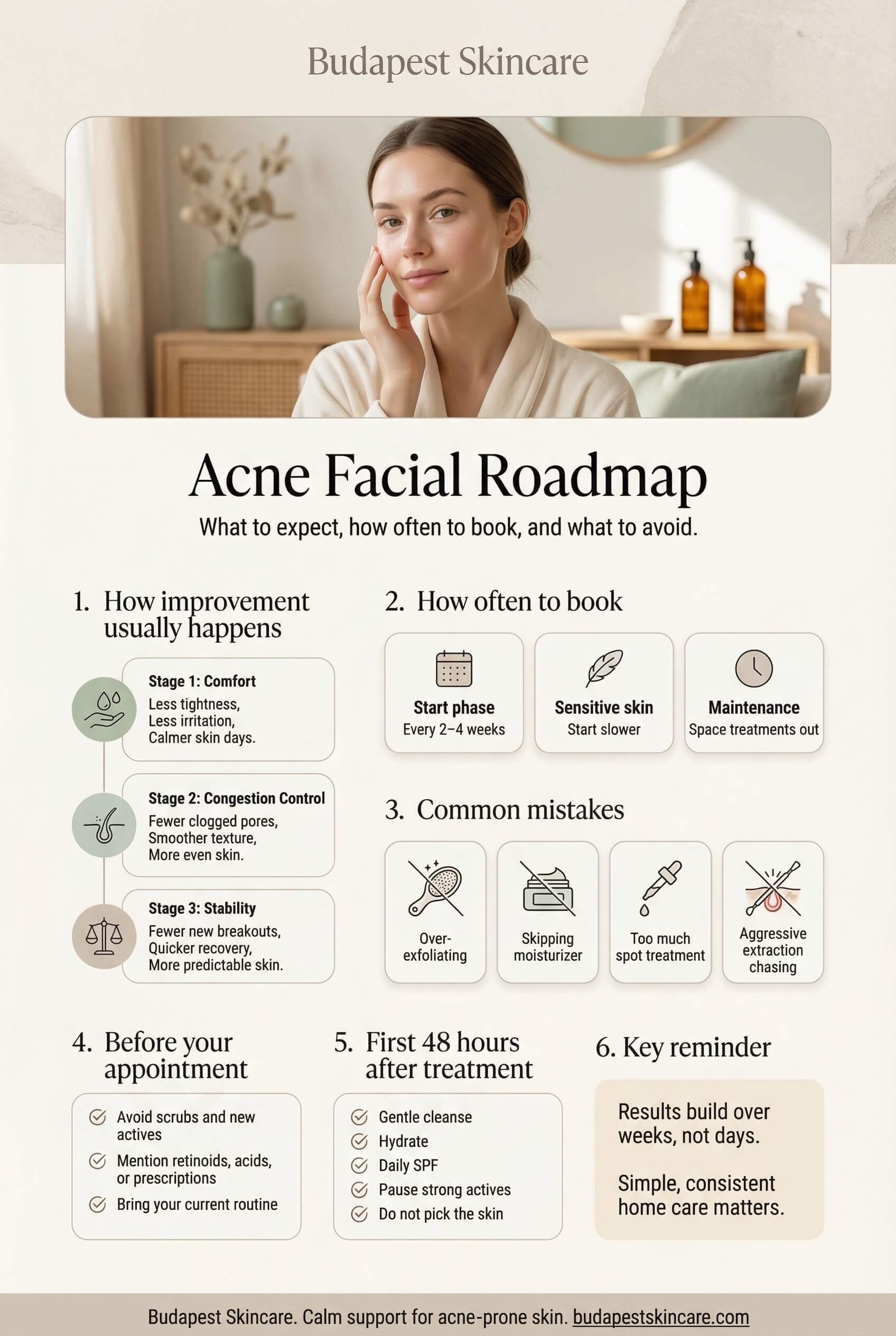
Frequency depends on how reactive your skin is and how inflamed your breakouts are. Many sensitive clients do best with a steady rhythm rather than frequent intensive treatments. A common range is every 3 to 6 weeks, with adjustments based on redness, dryness, and how your skin recovers.
If your skin is currently stinging or peeling from home products, spacing appointments further apart and simplifying your routine can be safer. Consistency usually matters more than intensity.
How to tell if a facial helped or irritated your skin
It is normal to have mild redness right after a facial. It should settle within hours, or by the next day for more reactive skin. Your skin should feel calmer, not increasingly sore.
Signs it was likely supportive
- Skin feels clean but not tight.
- Redness settles quickly.
- Congestion looks less raised over the next few days.
- Makeup and SPF apply more smoothly.
Signs it was likely too much
- Burning, stinging, or heat that persists into the next day.
- New widespread redness or rough patches.
- Sudden peeling or extreme tightness.
- Breakouts that feel sore in areas that were previously calm.
If you suspect irritation, simplify for several days. Use a gentle cleanser, a plain moisturizer, and daily sunscreen. Avoid exfoliants and strong acne actives until the skin feels normal again.
Common mistakes we see with sensitive, acne-prone skin
Small routine choices can make a big difference for sensitive acne. Many setbacks come from stacking too many “acne fixes” at once.
Using acne actives daily without a recovery plan
Daily acids, retinoids, benzoyl peroxide, and strong cleansers can be too much together. Sensitive skin often needs alternating nights, lower frequency, or a simpler approach. A calm barrier usually tolerates acne care better.
Trying to “dry out” acne
Over-drying can increase tightness and trigger more irritation. Dehydrated skin can still produce oil, so it can feel oily and dry at the same time. Hydration and barrier support are compatible with acne care.
Picking at pimples between facials
Picking adds inflammation and can prolong visible marks. It can also make the next facial more reactive because the skin is already stressed. If you struggle with picking, a plan that reduces congestion steadily is usually more sustainable.
Over-cleansing after commuting or workouts
In an urban environment, sweat, SPF, and city dust can increase the feeling of “needing to scrub.” Over-cleansing can backfire for sensitive skin. A gentle double cleanse in the evening can be enough without harsh friction.
Aftercare basics: the first 48 hours
Aftercare is part of the treatment, especially for sensitive skin. The goal is to keep inflammation low and protect the barrier while the skin settles.
- Keep it simple: gentle cleanser, moisturizer, and SPF.
- Pause strong actives: avoid acids, retinoids, and harsh spot treatments for 24 to 72 hours, depending on sensitivity.
- Avoid heat: skip saunas, very hot showers, and intense workouts if you flush easily.
- Do not pick: let the skin recover without extra trauma.
- Use sunscreen daily: especially if exfoliation was part of the facial.
If you have a medical acne prescription, follow your prescriber’s guidance. If you are unsure when to restart an active, a conservative approach is to wait until the skin feels fully calm and normal.
When to postpone an acne facial (or ask for a simplified session)
It is reasonable to postpone or simplify if your skin is actively irritated. That includes widespread peeling, burning with water, or significant redness that is new for you. A gentle calming session can be safer than a full deep-cleaning appointment.
If you have severe, painful acne, widespread inflammation, or signs of infection, a dermatologist is the right first step. A facial can support comfort and routine, but it is not a substitute for medical care when acne is severe.
How this fits into a bigger acne plan (pillar reference)
A single acne facial can help your skin feel cleaner and calmer, but long-term results usually come from a plan. A plan includes the right facial frequency, the right level of exfoliation, consistent home care, and realistic expectations.
If you want a broader overview of professional options and how they compare, see our pillar guide: Acne Treatment in Budapest: Professional Facial Options for Acne-Prone Skin. It explains how different facial approaches can support acne-prone skin in a non-invasive, salon setting.
Gentle next-step guidance (not a sales pitch)
A simple way to move forward is to list your current products and note any stinging, redness, or peeling. Bring that information to your next facial appointment so the professional can choose safer steps. If you are starting from scratch, begin with a gentle cleanser, a plain moisturizer, and daily sunscreen, then add acne actives slowly.
Summary
An acne facial for sensitive skin should prioritize barrier support, controlled exfoliation, and calming steps. Avoid excessive heat, aggressive extractions, and stacking strong exfoliants in one session. The safest progress is usually steady and consistent, with adjustments based on how your skin feels and recovers.

