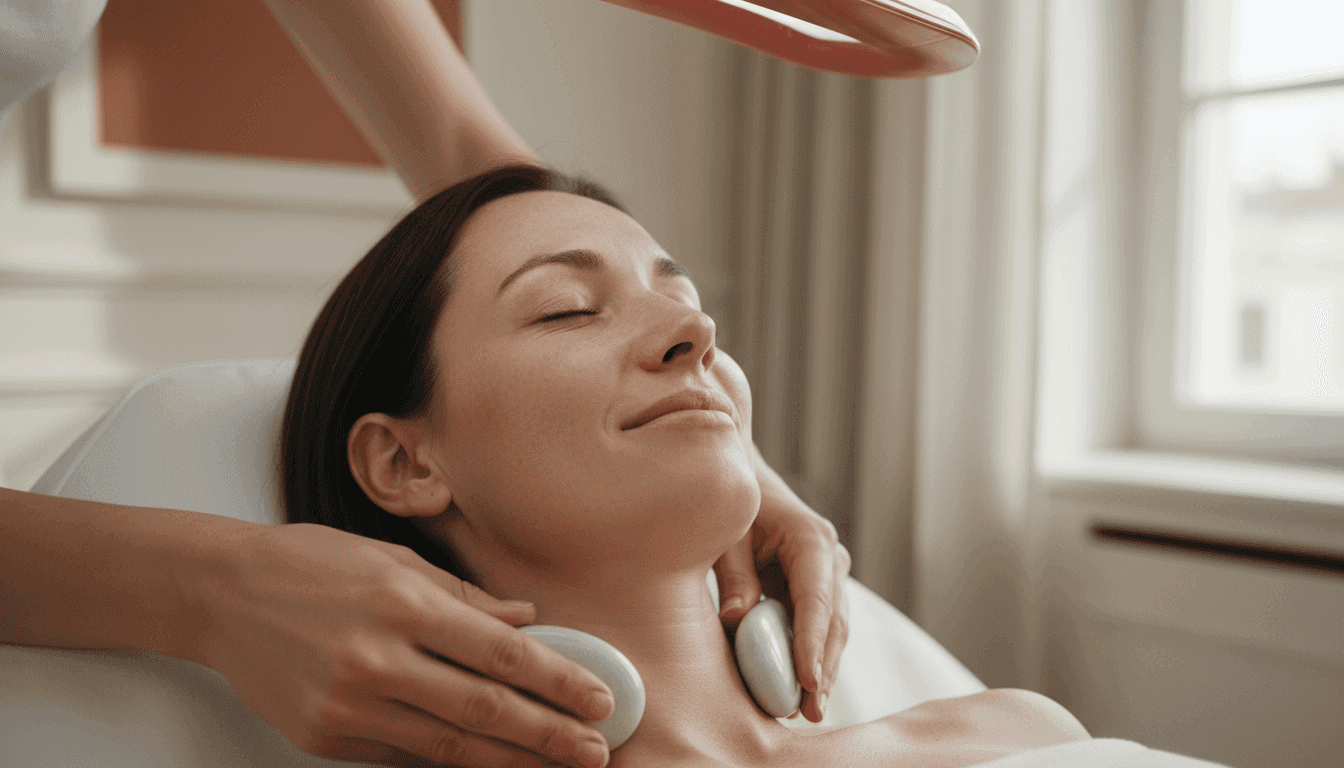
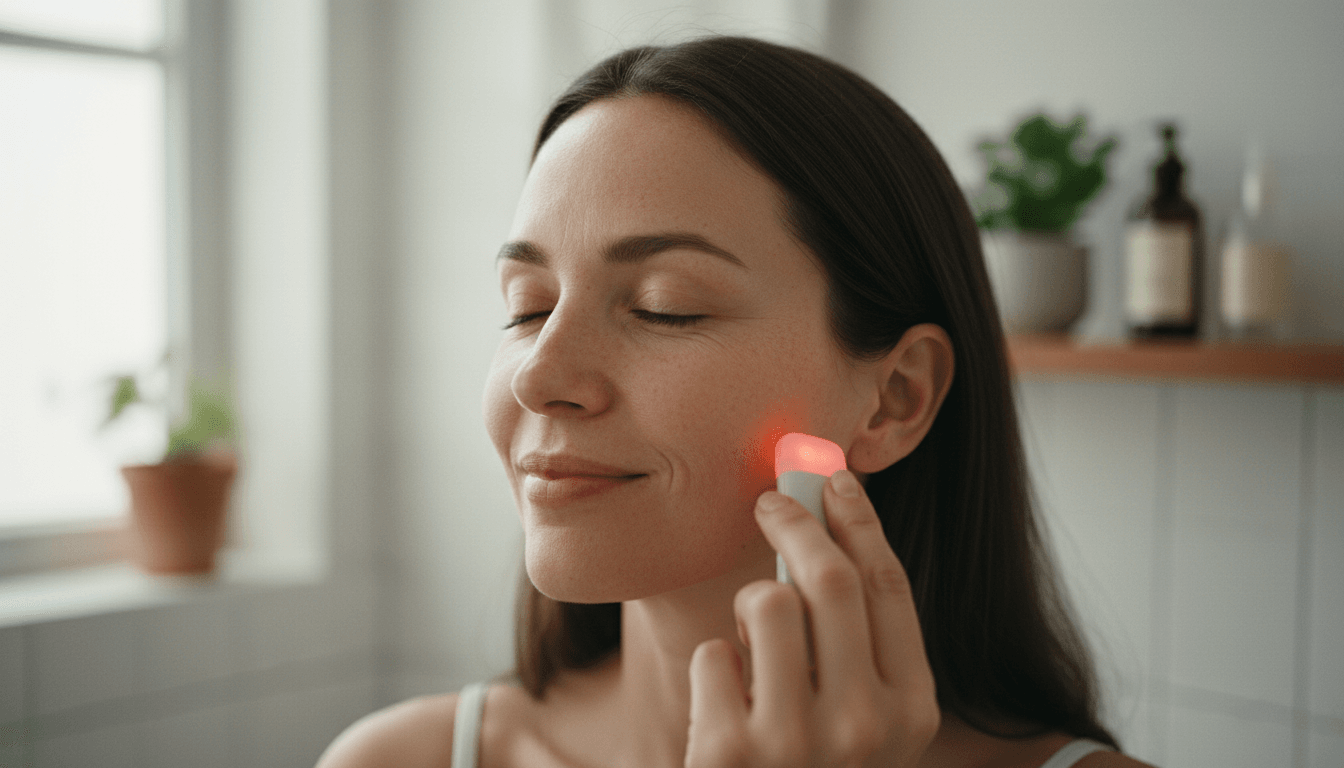
A LED therapy facial is a professional facial step that uses selected light wavelengths to support the skin after cleansing, exfoliation, hydration, or targeted treatment. It is usually added when the skin needs calm support, visible balance, or a gentler finishing step.
LED therapy is not needed in every facial. In practice, it is most useful when it matches the skin goal, the skin condition on the day, and the rest of the treatment plan.
What is an LED therapy facial?
An LED therapy facial is a facial treatment that includes exposure to low-level light from an LED device. LED stands for light-emitting diode. In skincare, LED light is used externally on the skin as a non-invasive support step.
LED therapy does not remove blackheads, exfoliate dead cells, or replace hydration. It is usually added after the more active parts of a facial, such as cleansing, peeling, extractions, serum application, or a calming mask. Its role is supportive rather than corrective on its own.
In a professional skincare setting, LED is often chosen because it is calm, quiet, and well tolerated by many skin types. It can be helpful when the goal is to support the appearance of comfort, balance, and recovery after a facial.
When is LED therapy added to a facial?led therapy facial
LED therapy is usually added when the skin would benefit from a non-invasive finishing or support step. The therapist chooses it based on the skin’s appearance, sensitivity level, and treatment goal. It should not be added automatically without considering the skin on the day.
In practice, LED is commonly added in these situations:
After a deep cleansing facial, when the skin needs calming support.
During facials for blemish-prone or oily skin, when the goal is a more balanced-looking complexion.
In hydration and glow-focused facials, when the skin looks tired, dull, or stressed.
In rejuvenation-focused facials, when the goal is smoother-looking, more rested skin.
When the skin needs a gentle step instead of stronger exfoliation or massage.
A good facial plan uses LED as part of the overall treatment, not as a standalone promise. The best results usually come from matching cleansing, exfoliation, hydration, barrier support, and home care with the correct professional steps.
Who may benefit from a LED therapy facial?
A LED therapy facial may benefit people who want a gentle, non-invasive support step during a professional facial. It is often suitable for clients who prefer visible skin improvement without aggressive treatment. Results vary by skin type, device settings, consistency, and the rest of the skincare routine.
Skin that feels stressed or easily reactive
LED therapy is often selected when skin looks stressed after cleansing, extractions, or exfoliation. Many clients notice that their skin feels more comfortable when a facial includes a calming support step at the end. This is especially relevant when the skin barrier is already under pressure.
In Budapest, many people notice more dryness and sensitivity during cold, windy winter months. In that season, a gentler facial plan with hydration, barrier support, and carefully chosen LED can be more suitable than a very active treatment.
Blemish-prone or oily skin
LED therapy can be included in facials for blemish-prone or oily skin when the goal is calmer-looking skin and better visible balance. It does not replace cleansing, pore care, or consistent home care. It is usually most useful as part of a wider skin plan.
A common pattern we see in salon practice is that clients expect LED alone to solve congestion. Congestion usually needs correct cleansing, careful exfoliation, deep cleansing when appropriate, and moisturising that does not feel heavy. LED may support the process, but it is not the whole treatment.
In a city environment, dust, pollution, SPF, sweat, and makeup can contribute to dullness and clogged-looking pores. In humid Budapest summers, many people notice more shine and congestion. A professional facial may combine cleansing, hydration, and LED support when the skin needs it.
Dull, tired, or dehydrated-looking skin
LED therapy may be added when the skin looks tired, flat, or depleted. In this case, LED is often paired with hydration, serum application, oxygen-focused steps, or a soothing mask. The aim is a fresher, more rested appearance.
Dehydrated skin often needs water-binding ingredients, barrier-friendly moisturising, and less irritation. LED can be a calm support step, but the foundation is still a well-planned facial and a simple home routine.
Early signs of aging and texture concerns
LED therapy is sometimes used in rejuvenation-focused facials when the goal is smoother-looking, better rested skin. It may be paired with peptides, massage, hydration, or other non-invasive technologies. It should be viewed as supportive care rather than a dramatic anti-aging solution.
Clients with early fine lines often benefit most when LED is combined with consistent hydration, daily SPF, gentle cleansing, and realistic treatment spacing. Skin quality usually improves gradually, not overnight.
What do different LED light colors mean?
Professional LED devices may use different wavelengths of light. The exact options depend on the device and treatment protocol. The most commonly discussed LED colors in facials are red and blue light.
Red LED light
Red LED light is commonly used in facials for comfort, glow, and rejuvenation-focused support. It is often chosen when the skin looks tired, dull, or in need of a calmer finish after treatment. It is also common in facials that focus on early signs of aging.
Red LED should not be described as a quick fix. It works best as part of a consistent skin plan that includes hydration, barrier care, sun protection, and professional treatment choices that suit the skin.
Blue LED light
Blue LED light is often used in facials for oily or blemish-prone skin support. It is commonly paired with deep cleansing, pore-focused treatments, and calming masks. It is not a replacement for dermatological care when acne is painful, persistent, cystic, or scarring.
If breakouts are severe, sudden, or linked with discomfort, it is sensible to speak with a dermatologist. A facial can support skin appearance and comfort, but it should not be treated as medical care.
Combined LED settings
Some professional treatments use more than one LED setting. This may be useful when the skin has mixed needs, such as oiliness with sensitivity or dullness with congestion. The choice should be based on the skin’s condition during the appointment.
More light options do not automatically mean a better facial. The correct match matters more than the number of settings used.
What to expect during a facial with LED therapy
A facial with LED therapy usually starts with skin cleansing and assessment. The therapist checks the skin’s oiliness, sensitivity, dehydration, congestion, and visible irritation. This helps decide whether LED is appropriate and when it should be added.
LED is usually performed after cleansing, exfoliation, extractions, serum application, or a mask. Protective eye covers are typically used. The step is quiet and does not usually feel hot or painful.
Many clients describe LED as a relaxing part of the treatment. The skin may look calmer, fresher, or less tired afterward. The result depends on the skin condition, the treatment combination, and how the skin responds.
How long does LED therapy take in a facial?
The LED portion of a facial is usually a shorter step within a longer treatment. Timing depends on the device, protocol, and skin needs. It is not always the longest or most important part of the facial.
A well-planned facial does not add LED just to make the treatment sound more advanced. If the skin needs cleansing, hydration, or calming first, those steps remain important. LED should support the treatment goal, not distract from it.
How often should you have a LED therapy facial?
The ideal frequency depends on the skin goal. For general glow, hydration support, or tired-looking skin, many clients choose LED as part of an occasional professional facial. For blemish-prone or highly stressed skin, a more structured plan may be more helpful.
Consistency matters more than intensity. A single LED facial may make skin look fresher, but longer-term improvement usually depends on regular care, suitable products, and avoiding irritation from overdoing active ingredients.
If the skin is sensitive, the safest approach is to start gently. A facial professional can adjust the treatment plan based on how the skin reacts after each appointment.
When LED therapy may not be the right choice
LED therapy is gentle for many people, but it is not suitable for every situation. Some clients need a simpler facial, a pause from active treatments, or medical guidance before using light-based skincare devices.
You should be cautious with LED therapy if you have a known light sensitivity, are using medication that increases light sensitivity, have an active skin infection, or have a medical condition where light exposure has been restricted. This is especially important if you are unsure about your current medication or health status.
LED should also be approached carefully when the skin is extremely irritated, sunburned, freshly damaged, or reacting strongly to products. In those cases, the priority is usually to simplify the routine and calm the skin barrier.
If you have a medical skin concern, persistent acne, severe inflammation, unusual lesions, or symptoms that change quickly, a dermatologist is the right professional to consult. A salon facial can support skin appearance and comfort, but it does not diagnose or treat medical conditions.
Common mistakes with LED therapy facials
A common mistake is expecting LED to do the work of an entire facial. LED does not clean pores, remove makeup residue, soften hardened congestion, or replace moisturiser. It works best when the rest of the treatment is also well chosen.
Another common mistake is combining too many active steps at once. Strong exfoliation, extractions, retinoids, acids, and aggressive home treatments can make the skin feel stressed. If the skin is irritated, adding more steps is not always better.
Some clients also expect one LED session to create a long-lasting transformation. A single treatment may improve the look of freshness, but skin health depends on repeated habits. Cleansing, SPF, hydration, barrier care, and treatment spacing all matter.
LED therapy and professional facial planning
LED therapy fits best when it is selected as part of a complete facial plan. This is why it connects naturally to the wider topic of Facial Treatments in Budapest: The Complete Guide to Choosing the Right Treatment. The right facial is not only about the technology used. It is about choosing the right combination of steps for the skin’s current condition.
For example, LED may be useful after deep cleansing when the skin needs calming. It may also support a hydration and glow treatment when the skin looks tired. In rejuvenation-focused facials, LED may be included alongside ingredients and techniques that support a smoother-looking complexion.
At Budapest Skincare, LED therapy appears in selected treatments where it fits the treatment goal. Relevant examples include the Hydraglow Treatment (60 min) - Hydraglow + ultrasound, oxygen therapy, LED therapy - 20,000 HUF, the Anti-Acne Facial Treatment (95 min) - Facial cleansing, enzymatic and pore-cleansing peeling, cleansing serum and soothing mask, vitamin C serum, oil-balancing mask, barrier cream, sun protection, High Frequency device, LED therapy - 22,000 HUF, and the Rejuvenation Facial Treatment (80 min) - Facial cleansing, eraser, stronger anti-wrinkle peptides, peptide serum, massage, hydrating skin rejuvenation closing cream, RF lifting, LED therapy, ampoule - 25,000 HUF. These examples show that LED is usually part of a broader treatment structure, not an isolated step.
Aftercare after a LED therapy facial
After a LED therapy facial, the best aftercare is usually simple. Use a gentle cleanser, a suitable moisturiser, and daily sun protection. Avoid adding new strong active products immediately after the treatment unless your skin professional has advised it.
If the facial included exfoliation or extractions, the skin may need extra calmness for a day or two. Heavy workouts, heat exposure, harsh scrubs, and strong acids may be better avoided briefly. The exact advice depends on what was performed during the facial.
If your skin feels tight, dry, or reactive after any facial, simplify your routine. Focus on hydration and barrier support. If irritation continues or worsens, seek professional guidance and consider medical advice when symptoms are significant.
How to know if LED should be added to your next facial
LED may be worth considering if your skin often looks stressed, dull, blemish-prone, or tired after a busy period. It may also be helpful if you want a non-invasive support step within a professional facial. The decision should still be based on your skin condition on the appointment day.
A practical way to decide is to ask what the LED step is meant to support. If the answer is clear, such as calming after cleansing, supporting a blemish-prone routine, or adding a gentle rejuvenation-focused finish, LED may make sense. If the reason is vague, the facial plan may need more careful adjustment.
For clients comparing facial options, it can be useful to start with the main skin goal first. Choose cleansing for congestion, hydration for dehydration, calming care for sensitivity, and rejuvenation support for tired or early aging concerns. LED can then be added when it supports that main goal.
Soft next step: choosing the right facial with LED
If you are unsure whether a LED therapy facial is right for your skin, a professional skin assessment can help clarify the best direction. The most useful question is not whether LED is good in general. The better question is whether LED is useful for your skin today.
When choosing a facial, explain your current routine, recent reactions, breakouts, sensitivity, and any active ingredients you use at home. This helps the therapist decide whether LED, deep cleansing, hydration, or a simpler calming treatment is the better choice.
Summary: when LED therapy is added and why
A LED therapy facial is usually added when the skin needs calm, non-invasive support within a broader professional facial. It may be helpful for stressed, blemish-prone, oily, dull, dehydrated-looking, or early aging skin, depending on the treatment plan. LED works best when it is chosen for a clear reason and combined with suitable cleansing, hydration, barrier care, and realistic expectations.