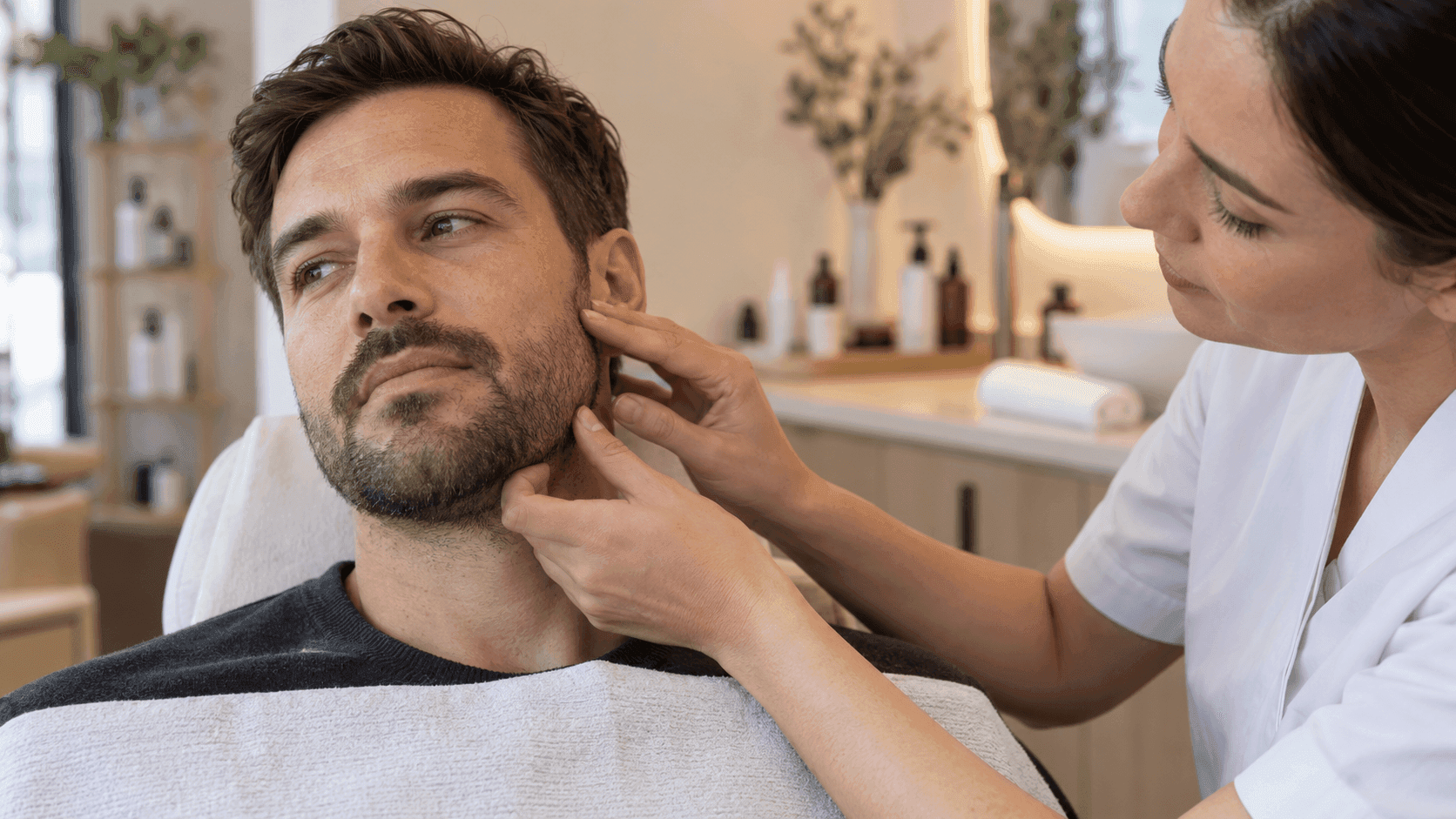
A beard area skincare facial focuses on clogged pores, oil buildup, rough texture and irritation around the moustache, chin, jawline and neck. It is useful for men with oily skin, shaving-related congestion, blackheads or a heavy feeling under facial hair.
The right men’s facial depends on beard length, skin sensitivity, oiliness and whether the main concern is congestion, dehydration, bumps or dullness. A professional treatment can support clearer-looking skin, but results vary and a simple home routine still matters between visits.
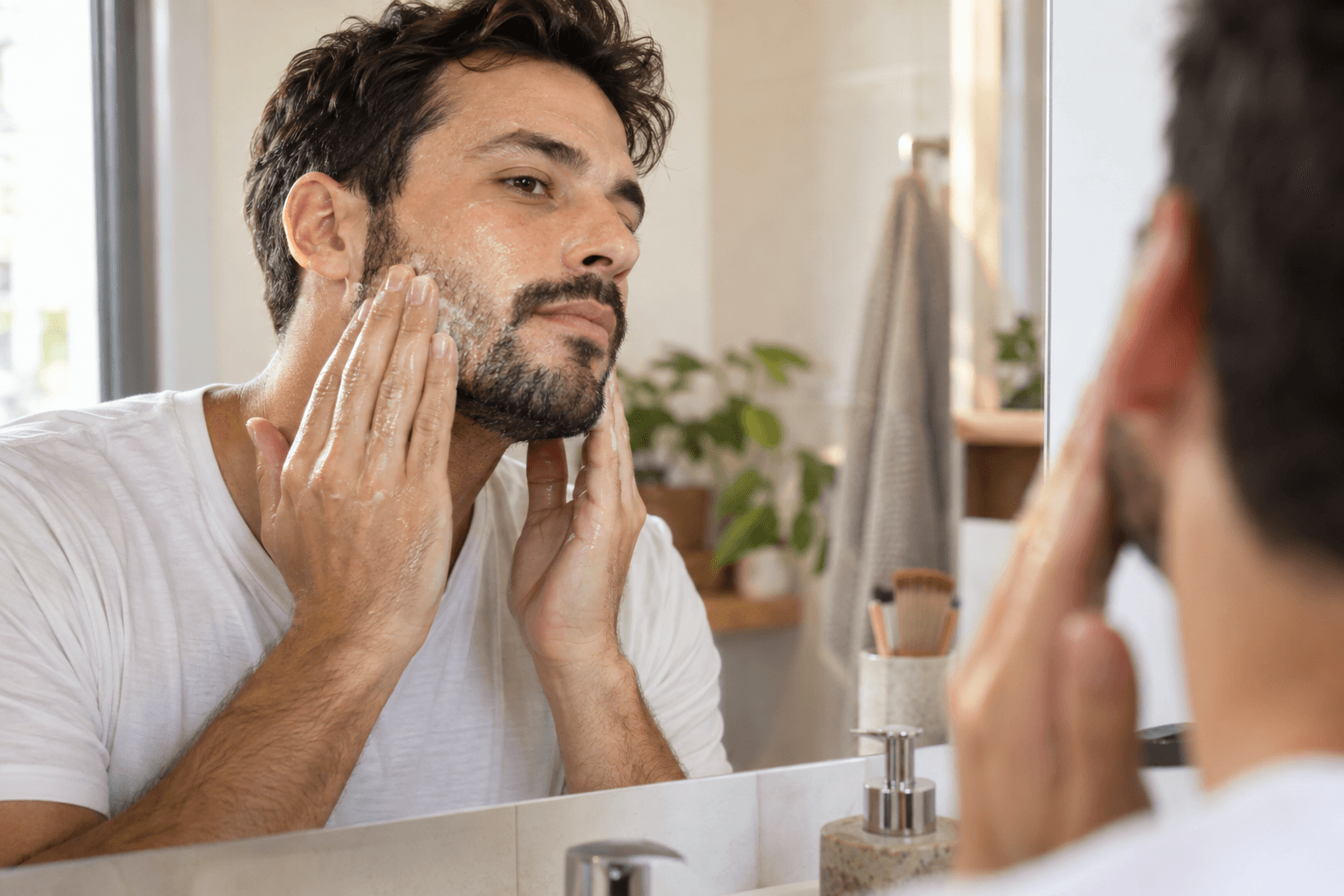
What is a beard area skincare facial?
A beard area skincare facial is a professional facial adapted for skin that is partly covered by facial hair. The focus is usually cleansing, softening buildup, gentle exfoliation, pore cleansing where accessible, calming the skin and restoring hydration.
The beard area includes the upper lip, chin, jawline, cheeks and neck. These zones often collect oil, sweat, SPF, shaving product residue and city dust. In practice, we often see that beard-area congestion is not caused by one product only. It is usually a mix of oil production, cleansing habits, shaving friction and trapped residue.
A facial does not remove facial hair or change beard growth. It also cannot treat medical skin conditions. If bumps are painful, spreading, infected-looking, very inflamed or persistent, a dermatologist is the right professional to assess them.
Why the beard area gets clogged and congested
The beard area can become congested because hair traps oil and product residue close to the skin. This can make pores look darker, texture feel uneven and the skin feel heavy or greasy by the end of the day.
Shaving can also affect congestion. A close shave can create friction and leave the skin feeling reactive. Not every post-shave bump is a clogged pore: ingrown hairs can also occur, so painful or persistent bumps deserve medical assessment. If heavy aftershave, oily balm or thick sunscreen sits on top of the area, the combination can make the skin feel blocked.
Men with oily skin often notice congestion on the nose, chin, jawline and beard line. These areas tend to produce more sebum. Sebum is the skin’s natural oil, but it can mix with dead skin cells and residue when cleansing is not effective enough.
Budapest city life can add another layer. Urban dust, commute exposure, sweat and daily SPF can sit on the skin throughout the day. This does not mean the skin is dirty. It means the cleansing step needs to be consistent and gentle enough to use daily.
Who is a beard area skincare facial for?
A beard area skincare facial is suitable for many men who feel that normal washing is not enough around the beard line. It can be especially helpful when the skin looks dull, feels greasy, has blackheads or develops small non-medical bumps after shaving.
It may be a good fit if you notice:
- Clogged pores around the chin, jawline or neck.
- Blackheads on the nose, cheeks or beard line.
- Oily skin that returns quickly after washing.
- Rough texture under or around facial hair.
- Post-shave irritation that is not severe or medically concerning.
- Dull skin from sweat, SPF and daily buildup.
It may not be the right first step if:
- The skin is broken, bleeding or actively infected-looking.
- You have painful cyst-like bumps or severe inflammation.
- You recently had a strong peel, laser treatment or prescription irritation.
- Your skin burns with most products and feels unstable.
- You are unsure whether the concern is acne, folliculitis, eczema or another medical condition.
If the skin is very reactive, a simpler calming facial or a dermatologist visit may be more appropriate than intensive pore cleansing. Safety comes before deep cleansing.
What to expect during a first men’s facial
A first men’s facial usually starts with a short skin consultation. The therapist looks at oiliness, sensitivity, beard length, clogged areas, shaving habits and current products. This helps decide how much cleansing, steaming, exfoliation and extraction the skin can tolerate.
The skin is then cleansed to remove surface oil, sunscreen and residue. In a professional skincare setting, cleansing around facial hair is done carefully because the skin under the beard can be easy to miss at home.
Exfoliation may be used to loosen dead skin cells and soften buildup. The exact strength should match the skin. Oily, resilient skin may tolerate more active cleansing. Sensitive or recently shaved skin usually needs a gentler approach.
Extractions may be performed where pores are accessible. Extractions are not suitable for every bump. They should not be forced, especially near inflamed or irritated beard follicles.
The treatment usually finishes with soothing, hydration and barrier-supporting products. This is important because skin that feels stripped often produces more oil or becomes uncomfortable after treatment.
Can you have a facial with a beard?
Yes, you can have a facial with a beard. A beard does not prevent professional skincare, but it changes how the treatment is performed.
Short stubble or a trimmed beard allows better access to the skin. A long, dense beard can limit deep cleansing and extraction underneath the hair. In that case, the therapist can still work around the cheeks, nose, forehead, neck and visible beard edges.
You do not always need to shave before a facial. In many cases, shaving right before treatment can make the skin more reactive. If you prefer a cleaner shave, it is often better to shave the day before, as long as your skin does not usually become irritated.
Shaving, beard care and clogged pores
Shaving and beard grooming can either support or disturb the skin. The technique and products matter as much as the razor.
A common mistake we see is using strong scrubs on the beard area after shaving. This can create extra friction on skin that is already sensitive. A gentler exfoliant used less often is usually safer than aggressive scrubbing.
Another common issue is heavy beard oils used too close to acne-prone or clogged skin. Beard oil can be helpful for hair softness, but some formulas feel too rich for oily or congestion-prone skin. If bumps increase after starting a beard product, pause it and observe the skin.
Simple shaving habits that support clearer-looking skin
- Cleanse the skin before shaving to remove oil and residue.
- Use a shaving product that gives glide without feeling heavy.
- Avoid dry shaving if your skin is prone to irritation.
- Rinse well after shaving so product does not sit in the beard line.
- Use a light, calming moisturiser after shaving.
- Avoid alcohol-heavy aftershaves if they leave the skin tight or burning.
- Change razor heads regularly if shaving causes frequent irritation.
Best home routine for beard area skincare
A good beard area skincare routine should be simple, consistent and not too harsh. The goal is to remove daily buildup without damaging the skin’s protective barrier.
Morning routine
- Cleanse with a gentle gel or low-foam cleanser if the skin is oily.
- Apply a light moisturiser if the skin feels tight or dehydrated.
- Use SPF during the day, especially after exfoliation or a facial.
- Choose lighter textures if the beard area clogs easily.
Evening routine
- Cleanse thoroughly to remove sweat, SPF, oil and city residue.
- Massage the cleanser into the beard line with fingertips, not nails.
- Rinse well so cleanser does not remain under facial hair.
- Use a light hydrating product if the skin feels dry after washing.
Weekly routine
- Use gentle exfoliation 1 to 2 times per week if tolerated.
- Avoid harsh scrubs on freshly shaved skin.
- Use a clay mask only if oily areas tolerate it without tightness.
- Pause exfoliation if the skin stings, flakes or feels unusually sensitive.
In many parts of Budapest, tap water can be harder because of minerals such as calcium and magnesium. Hard water can contribute to a tight or stripped feeling after cleansing in some people. If your face feels tight after every wash, use a milder cleanser, rinse carefully and focus on barrier support.
Oily skin in men: what helps and what to avoid
Oily skin needs balance, not punishment. Over-cleansing can make the face feel clean for a short time, but it often leaves the skin tight, dehydrated or reactive.
A simple way to think about oily skin is this: remove excess oil, but do not remove all comfort from the skin. Skin can be oily and dehydrated at the same time. Many clients notice this when the forehead is shiny but the cheeks or beard area feel tight after washing.
Helpful choices for oily beard-area skin
- Gel cleansers that cleanse well without a squeaky feeling.
- Light moisturisers that do not feel greasy.
- Non-grainy exfoliation if the skin tolerates it.
- Regular pillowcase and towel changes.
- Consistent evening cleansing after SPF and sweating.
Choices that often make congestion worse
- Scrubbing the chin and neck aggressively.
- Using heavy oils on skin that clogs easily.
- Skipping moisturiser because the skin is oily.
- Shaving over irritated bumps repeatedly.
- Using too many active products at once.
Which facial treatment may fit beard area congestion?
The best facial for beard area congestion depends on whether the main issue is clogged pores, oiliness, sensitivity, dehydration or post-shave irritation. Treatment selection should be based on the skin in front of the therapist, not only on the name of the facial.
For visible clogged pores and blackheads, a deeper cleansing approach is often chosen. For oily and acne-prone skin, a more targeted balancing facial may be more suitable. For dull and dehydrated skin without strong congestion, a hydration-focused treatment may be enough.
Deep cleansing option
Deep Cleansing Facial Treatment (60 min) - enzyme treatment, steaming, intensive deep cleansing, soothing pack, hydration - 19,900 HUF. This type of facial may suit men with blackheads, oily areas and visible buildup, especially around the nose, chin and jawline.
Oily and acne-prone option
Anti-Acne Facial Treatment (60 min) - Facial cleansing, enzymatic and pore-cleansing peeling, cleansing serum and soothing mask, vitamin C serum, oil-balancing mask, barrier cream, sun protection, High Frequency device, LED therapy - 28,900 HUF. This option may suit oily, congestion-prone skin when the goal is a balanced, calmer-looking finish. It is not a medical acne treatment.
Hydration and glow option
Hydraglow Treatment (60 min) - Hydraglow + ultrasound, oxygen therapy, LED therapy - 27,900 HUF. This option may suit men whose skin looks tired, dehydrated or dull, especially when congestion is mild and the skin needs freshness rather than intensive extraction.
A professional assessment is useful because beard length and sensitivity can change the treatment plan. For example, a man with a dense beard and sensitive neck may need less extraction and more calming support than someone with short stubble and resilient oily skin.
How often should men get a facial for beard area congestion?
Facial frequency depends on oiliness, congestion level, shaving habits, home routine and sensitivity. A common rhythm for congestion-prone skin is every 4 to 6 weeks, but this is not a fixed rule.
If the skin is very congested, an initial course may be discussed with shorter intervals. If the skin is stable, occasional maintenance facials may be enough. Results usually improve with consistent home care between appointments.
Seasonal changes can also affect timing in Budapest. Hot, humid summers can mean more sweat, SPF and clogged-feeling skin. Cold and windy winters can create dryness and barrier stress, so the skin may need more hydration and less aggressive exfoliation.
How long does it take to see improvement?
Many people notice that the skin feels cleaner and smoother immediately after a professional facial. Congestion, blackheads and rough texture usually need consistency. One facial can improve the appearance of the skin, but it cannot reset long-term habits in one visit.
For oily beard-area skin, visible improvement often depends on daily cleansing, shaving technique, product texture and regular follow-up. If the same heavy products or harsh habits continue, congestion can return quickly.
Post-shave bumps and inflamed-looking areas can be more complex. If they persist despite gentle care, they should be assessed by a dermatologist to rule out medical causes.
Before your first facial: how to prepare
Preparation should be simple. Do not start strong new skincare products in the few days before a facial. Arriving with irritated skin can limit what can safely be done during treatment.
- Do not use strong exfoliating acids or retinoids right before your visit if they make your skin sensitive.
- Avoid shaving immediately before the appointment if shaving usually causes redness or bumps.
- Trim facial hair only if you want better access to the underlying skin.
- Bring or remember the names of products you currently use.
- Mention recent irritation, prescription products or skin treatments.
If you are unsure whether to shave, choose the option that leaves your skin calmer. A facial can be adapted to facial hair, but freshly irritated skin is harder to treat comfortably.
Aftercare for the beard area
Aftercare should protect the skin and avoid unnecessary irritation. The skin may feel cleaner, softer and more hydrated after treatment, but it can also be slightly sensitive, especially if extractions were performed.
- Avoid strong exfoliation for a few days after treatment.
- Do not pick at pores or bumps after a facial.
- Use a gentle cleanser and light moisturiser.
- Apply SPF during the day.
- Avoid shaving for 24 hours if the skin feels sensitive.
- Keep beard products light if your skin clogs easily.
If redness, soreness or irritation feels unusual or does not settle, ask for professional guidance. If symptoms look severe or medical, contact a dermatologist.
Common mistakes with beard area skincare
The most common mistake is treating oily skin as if it needs to be stripped. This often leads to tightness, flaking and more discomfort.
The second common mistake is ignoring the skin under the beard. Facial hair can hide dryness, clogged pores and irritation until the texture becomes noticeable.
The third common mistake is changing too many products at once. If the skin becomes worse, it is then difficult to identify the trigger. A simple routine makes it easier to see what works.
FAQ: Beard area skincare facial
What should I expect during a beard area skincare facial?
You can expect cleansing, skin assessment, exfoliation if suitable, pore cleansing where accessible, calming products and hydration. The treatment is adapted to beard length, oiliness and sensitivity. Extractions should not be forced on inflamed or unsuitable bumps.
Should I shave before booking a men’s facial?
You do not always need to shave before booking a men’s facial. If you shave, doing it the day before is often more comfortable than shaving immediately before the appointment. If shaving irritates your skin, arrive with facial hair and let the therapist adapt the treatment.
Can a facial remove blackheads under a beard?
A facial can help with blackheads and clogged pores where the skin is accessible. A dense or long beard can limit access to the skin underneath. Trimming may improve access, but it is optional.
Is a men’s facial good for oily skin?
A men’s facial can support oily skin by improving cleansing, reducing visible buildup and helping the skin feel more balanced. It does not stop oil production permanently. Daily care remains important.
Can beard oil cause clogged pores?
Some beard oils can feel too heavy for oily or congestion-prone skin. If bumps or clogged pores appear after starting a beard oil, pause it and observe the skin. A lighter product may be better for the skin beneath the beard.
A practical next step
If beard area congestion keeps returning, it can help to review your cleanser, shaving product, beard oil, SPF and exfoliation habits together. In a professional facial setting, the treatment choice can then be matched to what your skin actually needs on the day, whether that is deep cleansing, calming support or hydration.
Beard area skincare works best when cleansing, shaving habits, product texture and facial treatments support the same goal. A beard area skincare facial can help manage visible congestion and oily buildup, but the most reliable results come from a simple routine, realistic expectations and adjustments based on how your skin responds.